


Thank you for reading! Letters from Leo is a reader-supported publication and the fastest-growing Catholic community in the country. To receive new posts and support this movement, consider becoming a free or paid subscriber.
Adam Hamilton spent last week learning how to be a senator. Kansas made him the first Democrat it has sent to the U.S. Senate since 1932 on Nov. 3, and six days later he reported to new-senator orientation in Washington.
On Nov. 29, the first Sunday of Advent, he will be back in the pulpit of the Church of the Resurrection, the largest United Methodist congregation in the country.
Hamilton drew the line between his two jobs for his congregation on Nov. 8. “I go to the Senate not to be their chaplain or to be America’s pastor. I will do the things a senator does,” he said. He calls the new work “expanding my calling,” and once he is sworn in on Jan. 3, he plans to preach 12 to 18 times a year.
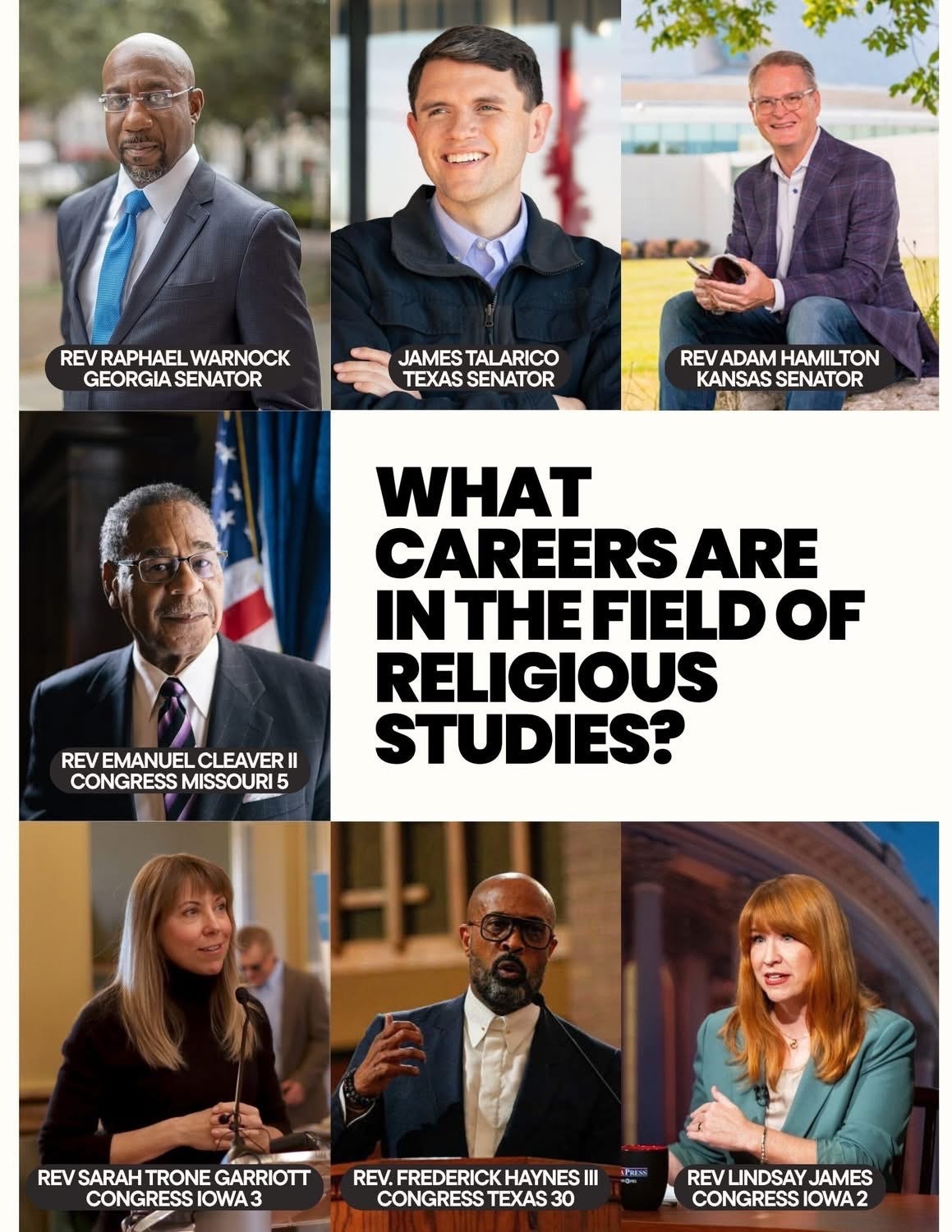
Two days after the election, Brannon Ingram, who teaches religious studies at Northwestern University, posted a graphic on X with a one-word caption: “<ehem>.” In block capitals, it asks, “What careers are in the field of religious studies?” Seven photographs supply the answer.


Hamilton is there, beside Sen. Raphael Warnock of Georgia (who still preaches at Ebenezer Baptist Church in Atlanta) and James Talarico, the Presbyterian seminarian who beat Ken Paxton in Texas.
Four members of the House fill the rest of the frame. Rep. Emanuel Cleaver II, a Methodist minister from Kansas City, just won a 12th term, and the Rev. Frederick Haynes III, who leads Friendship-West Baptist Church, won an open seat in Dallas.
The last two are Iowa pastors. Sarah Trone Garriott, an ordained Lutheran, unseated Rep. Zach Nunn in the 3rd District, while Lindsay James, a Presbyterian minister from Dubuque, took the Republican-held 2nd.
I laughed when I saw it. Then I counted the Catholic priests (zero), and the laugh turned into something closer to envy.
A rule John Paul II got right
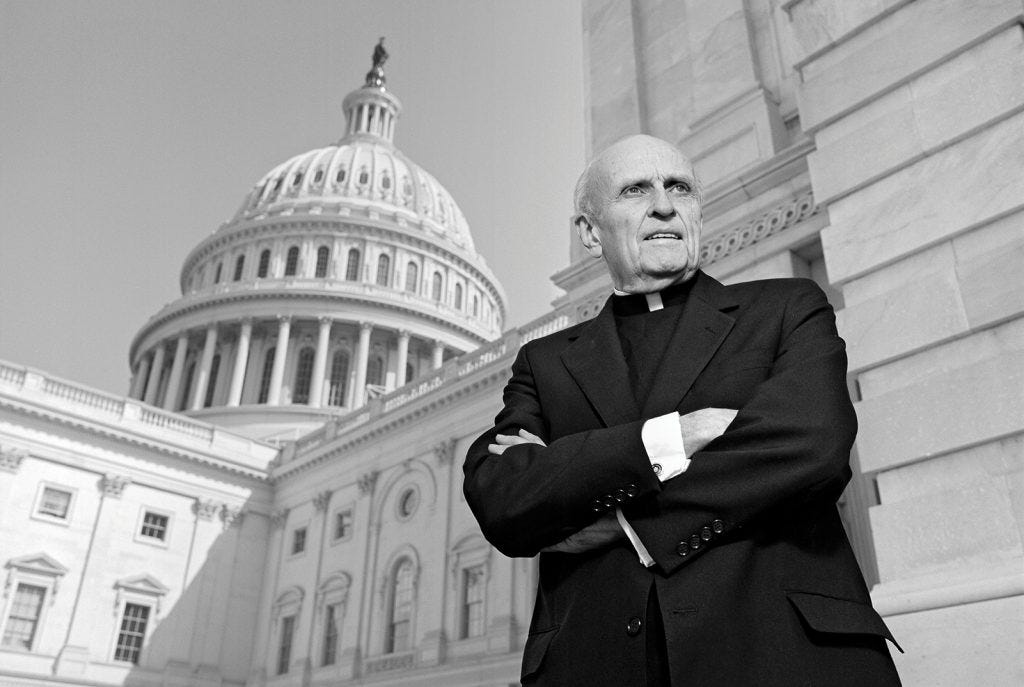
No Catholic priest could have made Ingram’s graphic, and the Church has good reasons for that. Canon 285 of the 1983 Code of Canon Law forbids clerics “to assume public offices which entail a participation in the exercise of civil power.” John Paul II enforced the rule before he ever wrote it down.
In 1980 he ordered Fr. Robert Drinan, a Jesuit who had served five terms in the House, out of Congress, and Drinan obeyed.
I made the full case for that rule in September, after two clerics I respect called me a partisan, and I still believe every word of it.
A priest has to be able to bury the Republican parishioner and baptize the Democrat’s granddaughter without anyone wondering whose side he’s on.
Once he votes on a defense bill, his homily begans to have an accidental partisan edge
Hamilton, without meaning to, made the case for that rule better than I did. “I find we’re a better church because we have Democrats and Republicans, liberals and conservatives, in Sunday school together, in worship together, serving Communion to each other,” he said in an interview published Nov. 11.
He offers that as a model for Washington. To a Catholic bishop, the same sentence explains why a parish priest can never run for the Senate.
The Protestant pastors on Ingram’s graphic felt that strain this fall, in a tradition that permits what ours forbids.
Kansas Republicans filed a Federal Election Commission complaint accusing Hamilton of improperly using church resources when he talked to congregants about running.
In Iowa, Republican Joe Mitchell called Lindsay James a “PINO — Pastor in Name Only.” Once the sincerity of one’s faith and vocation becomes a campaign credential, opponents treat it as fair game.
The attack failed.
Mitchell lost, and in an interview published Wednesday, James said the “pastors in name only” line “did fall flat, and I think we knew that immediately.” She means to show up in Washington the way a chaplain shows up at a hospital bed, “trained to run toward challenging circumstances.”
The FOMO
Still, I can’t shake the feeling. I have called politics my secular priesthood, and on Election Day I wrote here about the night six years ago when I lost my own race for Congress in Tennessee.
Watching seven ministers carry their vocations into the Capitol, I felt the old pull, along with a question I couldn’t answer: where are we?
The new members are already finding one another. Talk of a congressional clergy caucus has followed them through orientation, and James said she “would love to be a part of anything that comes together in that regard,” adding that she gets excited imagining “what a Capitol Bible study could look like.”
Trone Garriott, her former colleague in the Iowa Legislature, described her win in the language of ordination: “It’s really humbling to have this new calling to begin.”
The religious left on Ingram’s graphic is entirely Protestant. Black preachers have been going to Washington for generations (Haynes named Adam Clayton Powell and Floyd Flake as his forebears in March), and this year white mainline pastors joined them from the Kansas City suburbs and eastern Iowa.
America’s largest church sent no clergy at all, because it can’t.
Haynes, who plans to keep preaching at Friendship-West while he serves, has already answered the obvious worry about a pulpit in the Capitol. “We don’t want a theocracy,” he said after his win. “We want a country where, if you believe in God, if you don’t believe in God, whatever God you believe in, you feel valued.”
I was in Denver for What’s Next, and faith ran through the main stage. On the closing program on Nov. 13, Sen. Raphael Warnock preached from Isaiah about princes who are “companions with thieves” and leaders who “do not stand up for orphans and widows.”
Rep. Sarah McBride of Delaware told the room that Democrats have to be, “as scripture calls, repairers of the breach,” borrowing the prophet’s phrase from Isaiah 58.
Pete Buttigieg credited the party’s new class of winners with proving “that God does not belong to an American political party.”
Not everyone in Denver missed the gap. On Nov. 14, a What’s Next attendee who posts as @plathiandc put the question plainly:

I saw this tweet, and I said to myself, “What’s the answer to the challenge? We are answering the challenge. This community is showing what a Catholic progressive movement looks like.”
Catholic voters moved anyway, and by a lot.
The NBC News exit poll found Catholics backing Democrats for Congress 50 percent to 49 percent on Nov. 3, after favoring Republicans 59 to 39 two years ago. That 21-point swing came in the first midterm of Pope Leo XIV’s pontificate.
The answer belongs to the pews
The Second Vatican Council assigned this work to the laity in plain words. “Secular duties and activities belong properly although not exclusively to laymen,” the bishops wrote in Gaudium et Spes in 1965.
They added a warning I return to often: “Let the layman not imagine that his pastors are always such experts, that to every problem which arises, however complicated, they can readily give him a concrete solution.”
Canon law even leaves a side door open. Canon 288 exempts permanent deacons from the ban on public office, so unless his bishop’s particular law says otherwise, the married deacon who baptized your nephew could run for Congress next cycle. Same goes for non-ordained women and men in consecrated life.
Hamilton pointed toward the real answer himself. Asked about a clergy caucus, he guessed it would be less “a caucus of clergy” than “a caucus of thoughtful people who take their faith seriously,” and among the Democrats he named was Sen. Tim Kaine of Virginia, a Catholic layman who took a year off from law school to work with Jesuit missionaries in Honduras.
The best Catholic reply to Ingram’s graphic won on Nov. 3. Peggy Flanagan, Minnesota’s Ojibwe lieutenant governor, beat Michele Tafoya and will become the first Native American woman elected to the Senate. She is a devout Catholic who once went to see Beyoncé with her pastor, Fr. Dale Korogi, which tells you something about the parish life behind her politics.
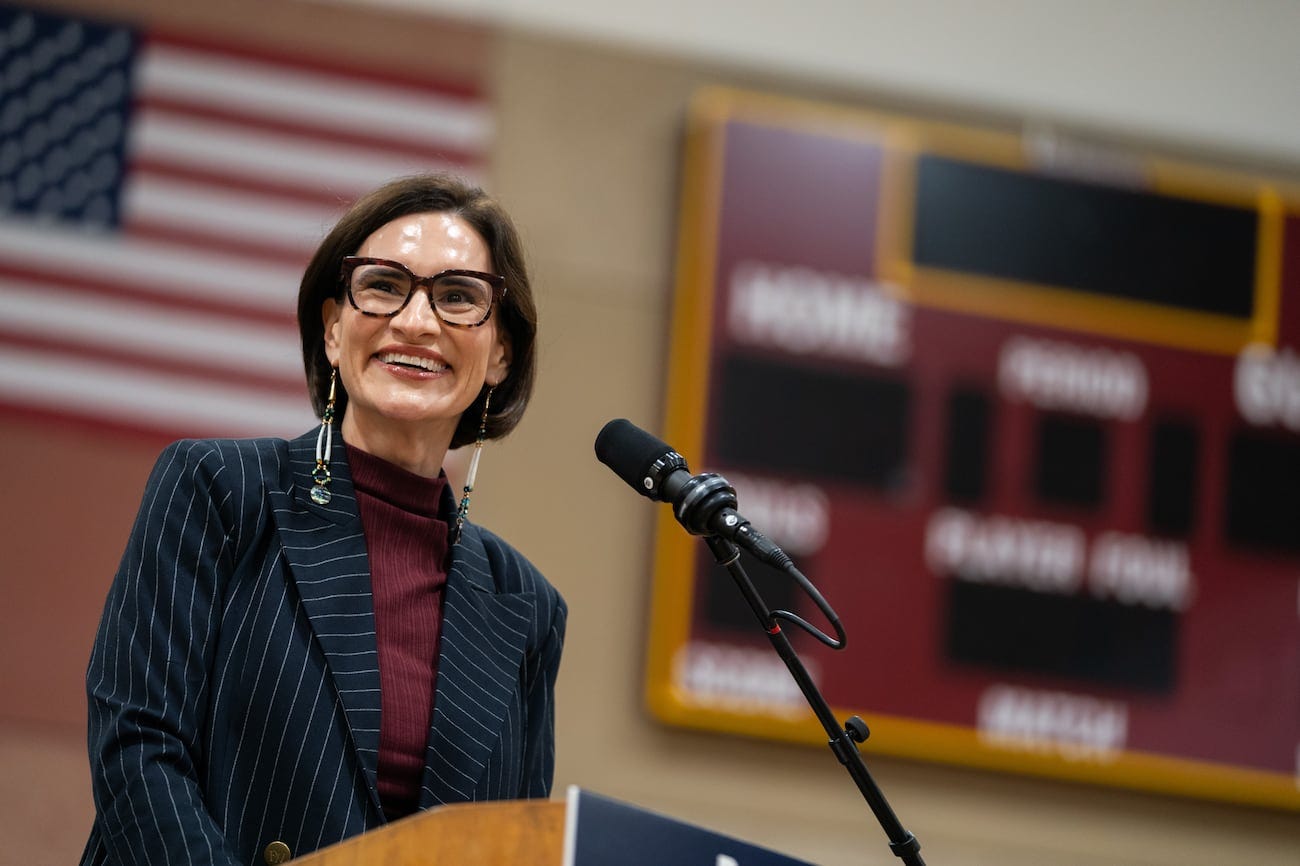
Her faith does visible work in her politics. “I’m Catholic, I go to church every Sunday, and I am very clear that my faith tells me to welcome the stranger,” she said in one interview, adding that she often wears a medallion of Mother Cabrini, the patron saint of immigrants.
A Catholic version of that graphic would be crowded with laypeople like her.
Picture a Medicaid nurse from Wichita, or a union electrician in Scranton who has actually read Rerum Novarum, running for the House because her pastor told her the Council meant it.
Pope Leo XIV shows what a priest’s power looks like when it stays out of office. He has never held a seat in any legislature, and he requested a mail ballot to vote in these midterms like any other citizen abroad.
In 18 months he has still moved more American consciences on war and immigration than most senators manage in a career.
He used that power on the flight home from Lima this week.
Asked what he expects after the midterms, Leo said he wants “a greater capacity for dialogue, more bridge-building and reconciliation, less acrimony,” along with “fewer wars and less division.” Then he drew the same line canon law draws. “I’m not making a political comment,” he told reporters.
“I’m promoting the Church’s social teaching and hoping that some people will listen.”
So I’ll hold canon law and my FOMO (fear of missing out) in the same hand. Congratulations to the seven, and to Professor Ingram for the best career-fair flyer of the year. Somewhere in a Catholic parish tonight sits the layperson who belongs on the next one, and she should start making calls.
A word to our community
At Letters from Leo, we stand with every Catholic and every person of goodwill who believes public life can be a work of love, and with the laypeople the Council sent out the church doors to do it.
In a season when powerful men tried to turn the faith into a weapon against a pope, we keep faith with a Church that calls politics “one of the highest forms of charity” and refuses to let it become an idol.
This is the fastest-growing Catholic community in the country because people are hungry for a faith that sends them out to serve the common good. If you believe in this movement of Catholics and people of goodwill answering the Council’s call to public life, I am asking you to join us.
If you’d like to invest in our mission, here are three ways you can help:
Subscribe as a paid member to receive exclusive posts about the life and formation of Pope Leo and help sustain this newsletter.
Donate with a one-time gift to fuel this project’s mission.
Share this post (and Letters from Leo) with a friend who might enjoy it.
Paid members also receive our series on Pope Leo’s Life & Formation and the Sunday Scripture Reflection Series.
Whether you give $0, $5, $50, $500, $1,000, or more, your presence here matters — no matter your faith or your politics.
Thank you for reading. I’ll see you on the road.
