


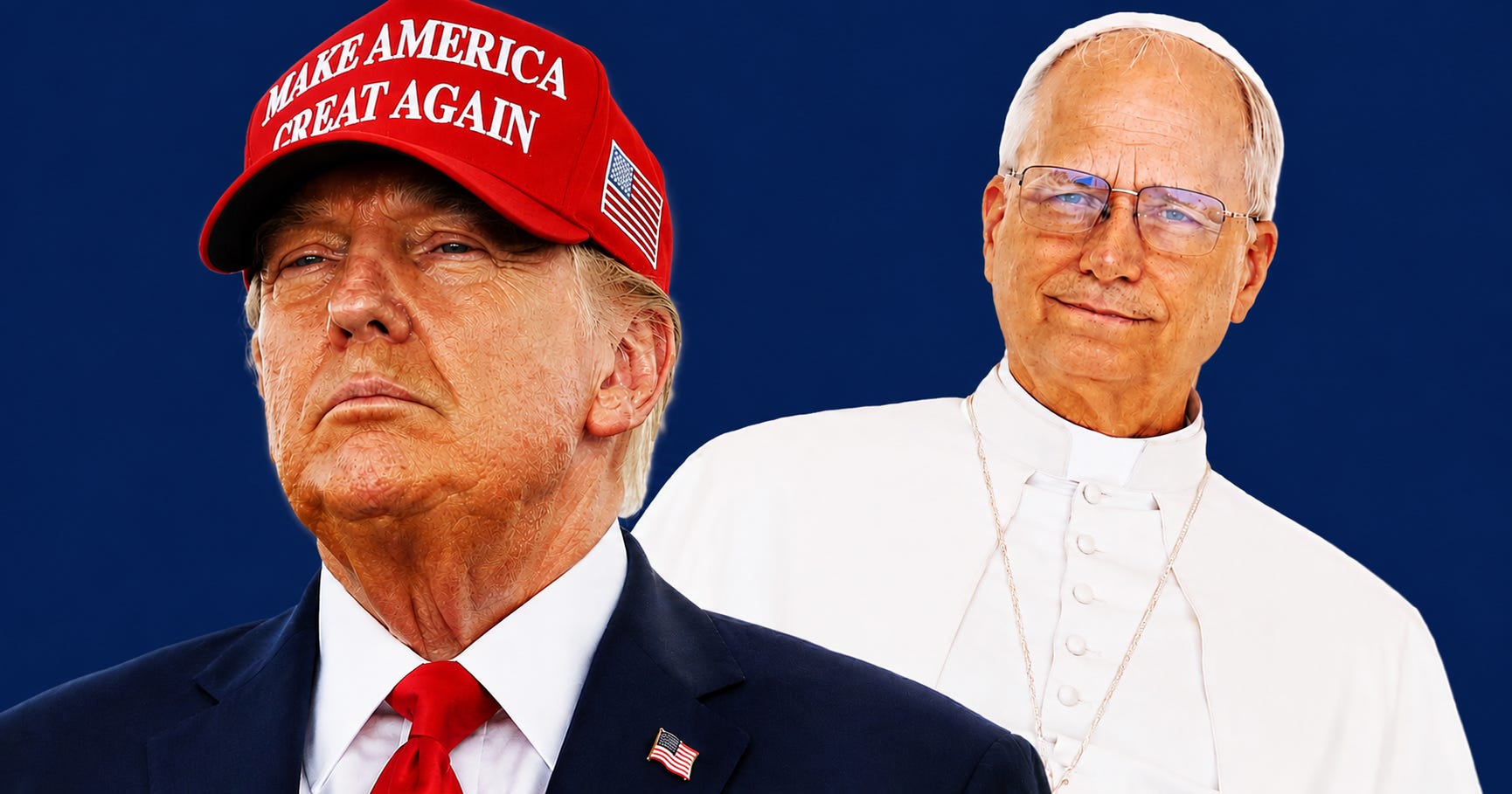
Thank you for reading! Letters from Leo is a reader-supported publication. If you find value in my work, please consider becoming a paid subscriber or making a one-time donation.
On Monday afternoon in Rome, Vatican News published an editorial by Andrea Tornielli, the editorial director of the Holy See’s Dicastery for Communication and arguably the man most responsible for how Pope Leo XIV’s message reaches the world. The piece carries a title that doubles as a thesis: “The Pope always speaks as a Shepherd.”
“Even when he speaks about war and peace, migration or how to remain human in the age of artificial intelligence,” Tornielli writes, “the Successor of Peter remains, above all, a spiritual leader.”
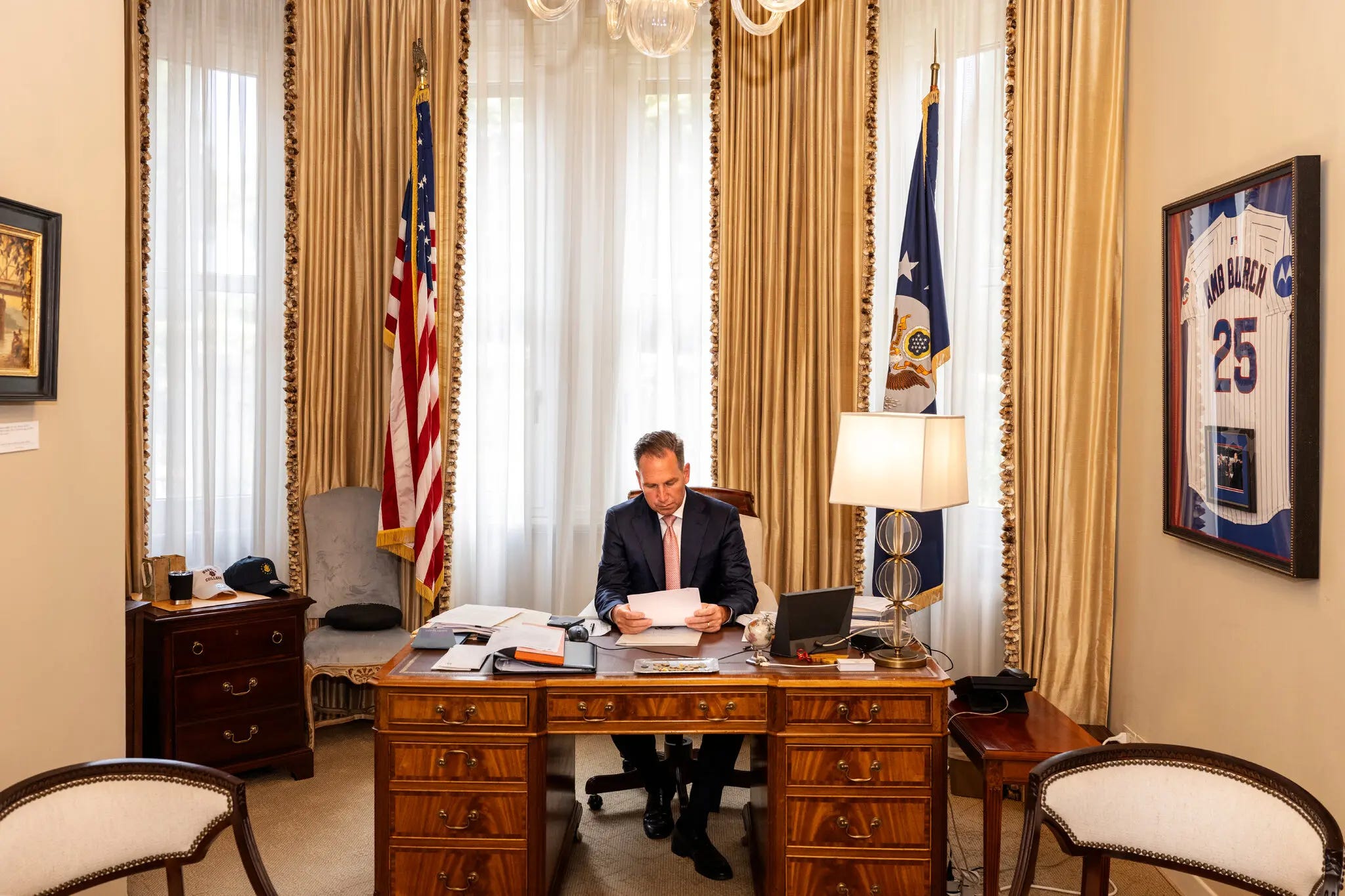
No American official is named anywhere in the editorial. Four days earlier, though, The New York Times published a lengthy interview with Brian Burch, the United States ambassador to the Holy See — and once you have read it, Tornielli’s essay is unmistakable as a point-by-point answer.
Burch told the Times that the months-long clash between President Trump and Pope Leo over the U.S.-Israeli war in Iran rests on a narrative he considers “false” and “entirely unfair.” He also insisted the pope has never actually declared the war unjust. “The Vatican has not said, nor will they say, declare definitively whether or not this is a just or unjust war,” the ambassador said during a 90-minute conversation at his office in Rome in late June.
Pope Leo settled that question weeks earlier aboard the papal plane. “I believe this has already been made very clear: In Iran, the criteria for a just war are not present,” he told reporters on his June flight to Spain.
How does an ambassador square that circle? Burch’s answer holds that a definitive judgment lies beyond the pope’s reach, because Leo possesses only “a set of limited facts.”
In a companion interview with the Italian daily La Stampa, published two days before the Times piece ran, he laid out the theory underneath: “the Holy Father plays two roles,” he said — head of the Catholic Church and head of the Holy See, “a sovereign leader who interacts with the world as such.”
Follow that logic to its end, and the destination is remarkable.
When Leo condemns the war in Iran, the words issue from the sovereign of a half-square-kilometer city-state — one foreign government’s foreign policy, in effect — rather than from the successor of Peter teaching Christ’s Church.
The moral verdict becomes “the opinion of the Vatican” only because the Vatican happens to be a state, as if the American government could weigh the pope’s words the way it weighs a communiqué from San Marino, Monaco, or Luxembourg. Opinions like that can be waved away.
Rome has noticed. Gerry O’Connell, America’s veteran Vatican correspondent, reported Monday that a senior church prelate with diplomatic experience responded this way soon after the interview published:
“I think the ambassador doesn’t realize exactly to whom he has been accredited. He should know that the pope is never ‘only the sovereign political leader of the Vatican City State’ and that diplomats are accredited to the Holy See and not to the Vatican City State.”
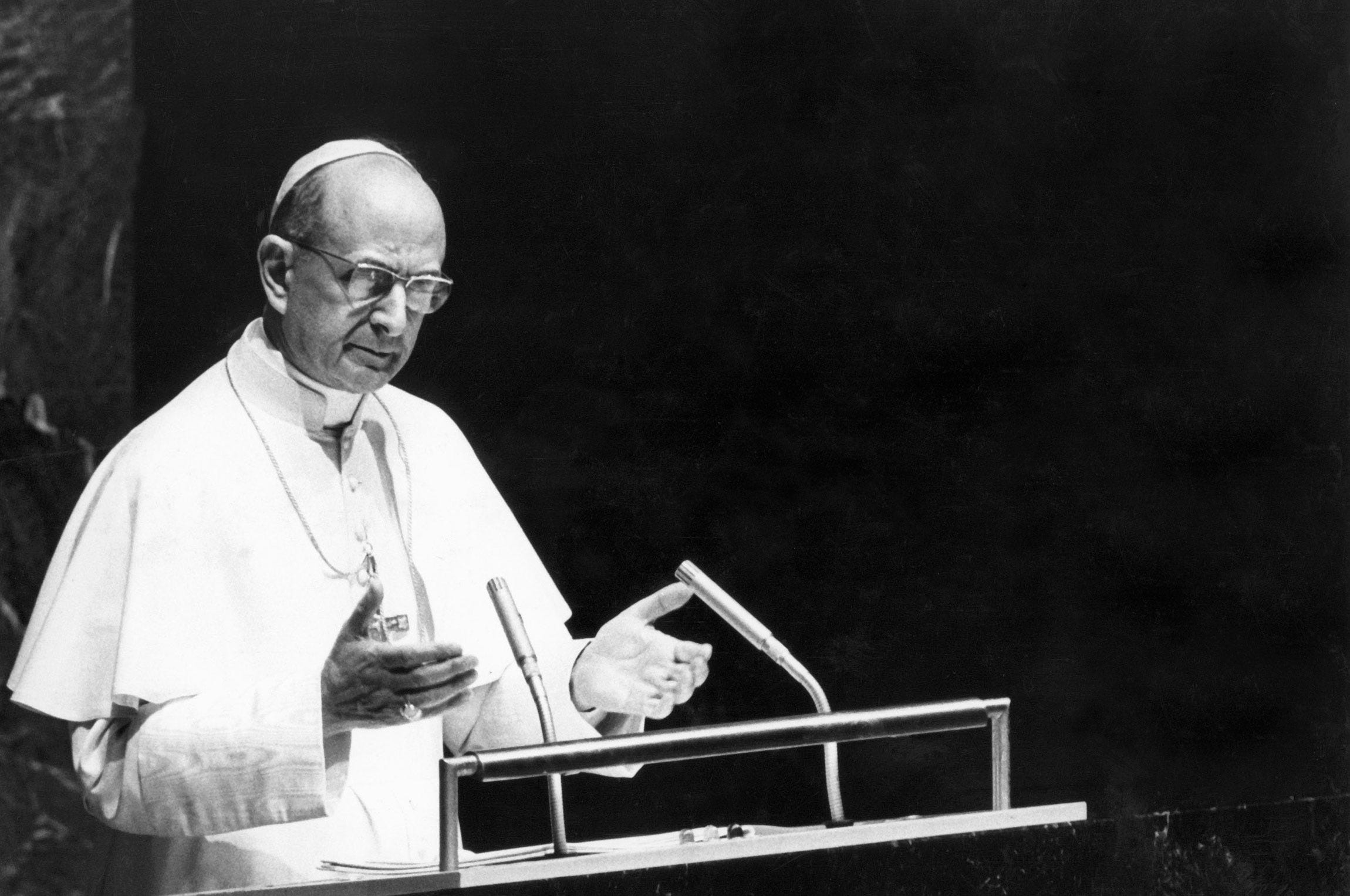
Tornielli devoted his editorial to dismantling that theory. The Holy See’s temporal sovereignty exists for one purpose, he explains: Paul VI, standing before the United Nations in 1965, called it “the minimum needed in order to be free to exercise his spiritual mission.” And the papacy grew stronger in its moral influence, Tornielli notes, after it lost the Papal States in 1870 — freed from earthly kingdoms, it could finally speak to all of them.
Then comes the sentence written, however discreetly, for the ambassador’s residence: “Any glorification or exaggeration of the Pope’s role as head of state, any emphasis on the importance of this role, is therefore misleading because it comes at the expense of his one true mission as universal Shepherd.”
And when the pope pleads for an end to what Tornielli calls “the mad arms race” — “even going beyond the concept of a ‘just war’” — the editorial’s closing line leaves no room for a diplomat’s reframing: “the Successor of Peter is not speaking as a head of state. He is simply proclaiming the Gospel.”
The administration has run this maneuver before.
In January, after Pope Leo used his Angelus address to insist that Venezuela’s sovereignty be safeguarded amid the American military campaign there, Burch downplayed the pope’s call for peace and suggested his words were compatible with — even supportive of — the American intervention. The sovereignty warning vanished from his account entirely.
I covered that episode in detail at the time, and the pattern it established is the one Tornielli confronted this week: when the pope’s words cut against Washington’s policy, reframe the words.
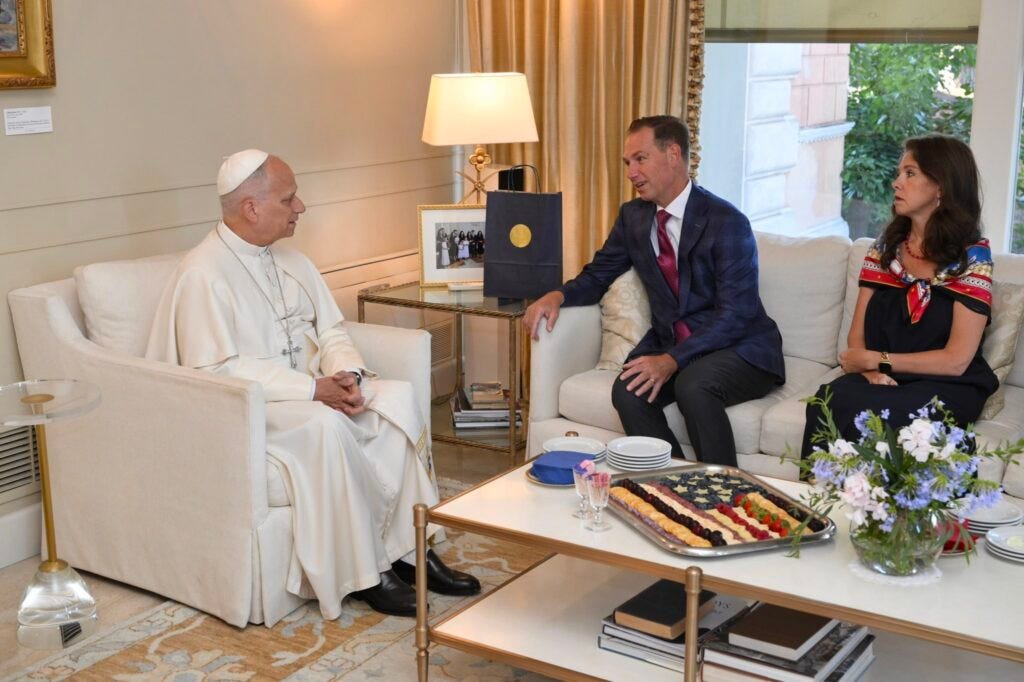
Which makes the evening of July 4 all the more striking. Five days before the Times interview appeared, Pope Leo — having returned that same day from Lampedusa, where he spent America’s 250th birthday with migrants who survived the sea crossing — came to dinner at Burch’s villa in Rome. He blessed religious objects for the family, ate Chicago-style hot dogs and watermelon salad, signed baseballs dated 7-4-26, and stayed through sparklers and “God Bless America.”
It matters that Leo took that meeting. Anyone who has read the four extraordinary books on this pope — Elise Ann Allen’s Pope Leo XIV: The Biography, Christopher Lamb’s American Hope, Christopher White’s Pope Leo XIV: Inside the Conclave and the Dawn of a New Papacy, and Gerard O’Connell and Elisabetta Piqué’s The Election of Pope Leo XIV — will recognize the pattern of a lifetime: Robert Prevost listens to everyone, and he does not slam doors, even doors held open by an administration whose policies he has condemned.
Now for the part of this essay I have been circling. Writing about Brian Burch is complicated for me, because Brian Burch has been my friend for years — through every fight in Catholic politics that should have made us enemies. Let me give you some background on why that is, and why I am writing this anyway.
