


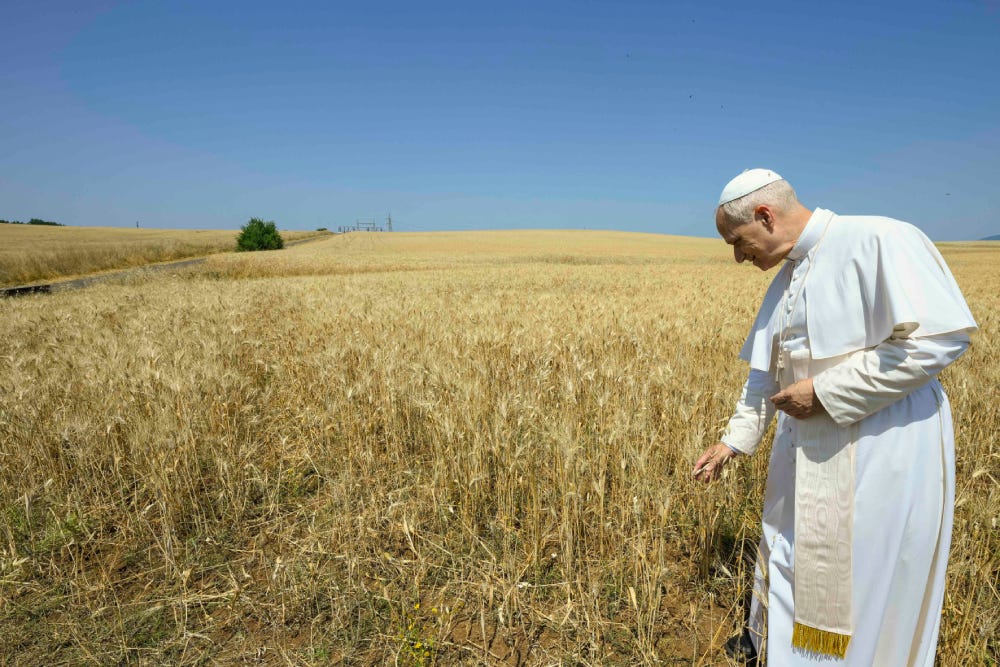
Thank you for reading! Letters from Leo is a reader-supported publication and the fastest-growing Catholic community in the country. To receive new posts and support this movement, consider becoming a free or paid subscriber.
One housekeeping note before the text: the free copy of Pope Leo XIV’s new book Freedom Under Grace for brand-new yearly subscribers and $80 donors runs through Friday night, and it can only be claimed from the review itself.
The Vatican’s International Theological Commission published a 29,000-word document on Sept. 2 that gives the wrecking of the natural world a name in the Church’s moral vocabulary: a “sin against creation and against the Creator.”
Its title is Caring for Our Common Home: A Responsible and Fraternal Response to the Triune God, and for now it exists only in Italian. Commission members approved the text by majority vote in July; Cardinal Víctor Manuel Fernández, who runs the Vatican’s doctrine office, cleared it for release after presenting it to Pope Leo XIV.
It landed one day after Leo released his prayer intention for September, offered “for the care of water,” on the opening day of the Season of Creation.
The prayer asks God’s forgiveness “for turning it into a commodity, forgetting that it is a universal gift, a right without borders, meant for all your children.” Vatican News ran it beside United Nations figures showing that 2.1 billion people lack safely managed drinking water.
MAGA commentators sneered, as I reported two weeks ago. “Much easier to post slop like this than discuss abortion,” Mike Cernovich told his 1.5 million followers on X.
Deacon Nick Donnelly of England announced that “the most endangered resource isn’t water or glaciers. It’s the human soul.” Tom Woods, the libertarian author, told his followers to “head to the Vatican’s website and read papal documents from Popes Pius X, XI, and XII.”
Cernovich and Donnelly both assumed that a pope who prays over rivers has walked away from souls.
What the Theologians Wrote
The commission sets aside Pope Francis’s phrase “ecological sin” for wording that keeps God in the sentence. “We propose understanding this sin against our Common Home as a ‘sin against creation and against the Creator,’” the text reads, “insofar as it violates the meaning of creation intended by God the Creator.”
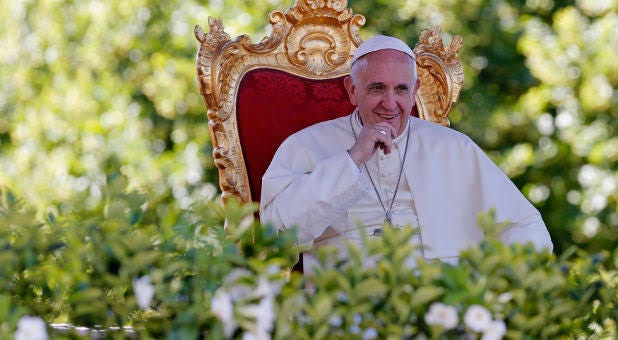
Leo is cited by name as the reason. “As Pope Leo XIV emphasized,” the authors write, “we believe it is appropriate to favor a formulation that simultaneously implies both the harm inflicted on nature and the failure to recognize, or even the rejection, of the Creator’s plan.”
The harm, by their account, never stays in the soil. In committing this sin, the document says, “we not only fail to respect God’s plan and mistreat creation, but we also harm our neighbors, especially the poorest and future generations.”
The commission advises the Dicastery for the Doctrine of the Faith; its texts carry no magisterial force of their own. Msgr. Piero Coda, the secretary general, wrote in a Vatican News commentary that the new category should take hold the way “the notions of social sin and structures of sin have progressively consolidated.”
Benedict XVI Was the Green Pope
None of this is new, and nobody should mistake it for a revolution. Woods, reaching back to the Piuses, skipped a closer shelf: Newsweek named Benedict XVI “the green pope” in an April 2008 profile by Daniel Stone, the year 2,400 solar panels went up on the roof of the Paul VI Audience Hall.
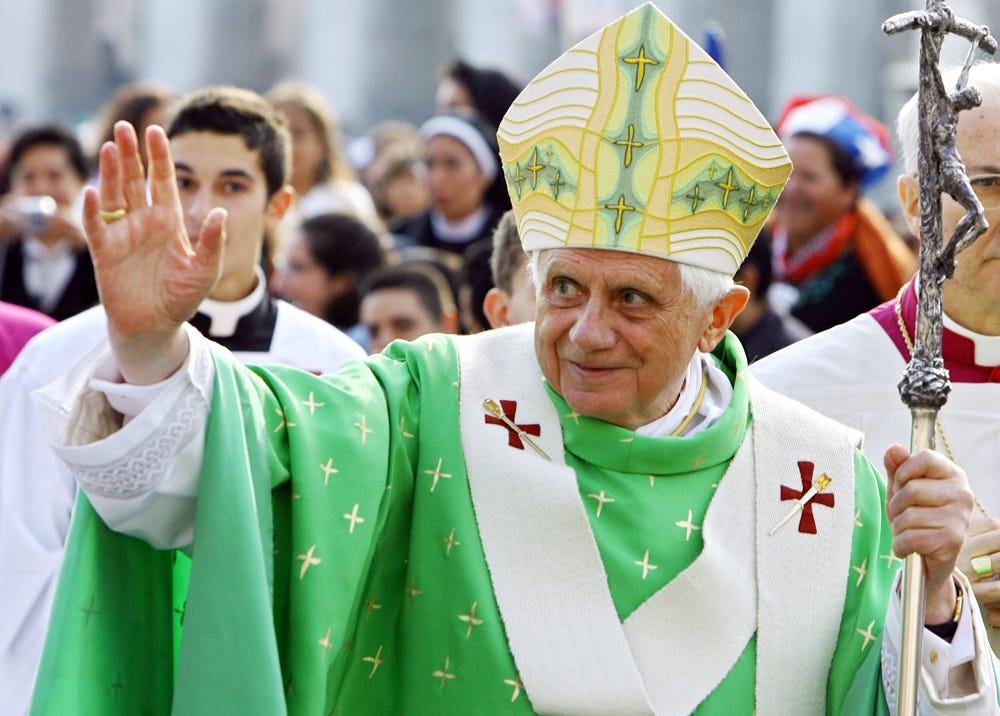
Benedict titled his 2010 World Day of Peace message “If You Want to Cultivate Peace, Protect Creation.” In it he asked whether anyone could “remain indifferent” before climate change and “the pollution of rivers and aquifers” — a line about water, written almost seventeen years before Leo’s prayer.
He was building on John Paul II, whose 1990 peace message carried a section headed “The ecological crisis: a moral problem.” Francis told a congress of penal lawyers in November 2019 that the Church was thinking of adding “ecological sin against the common home” to the Catechism.
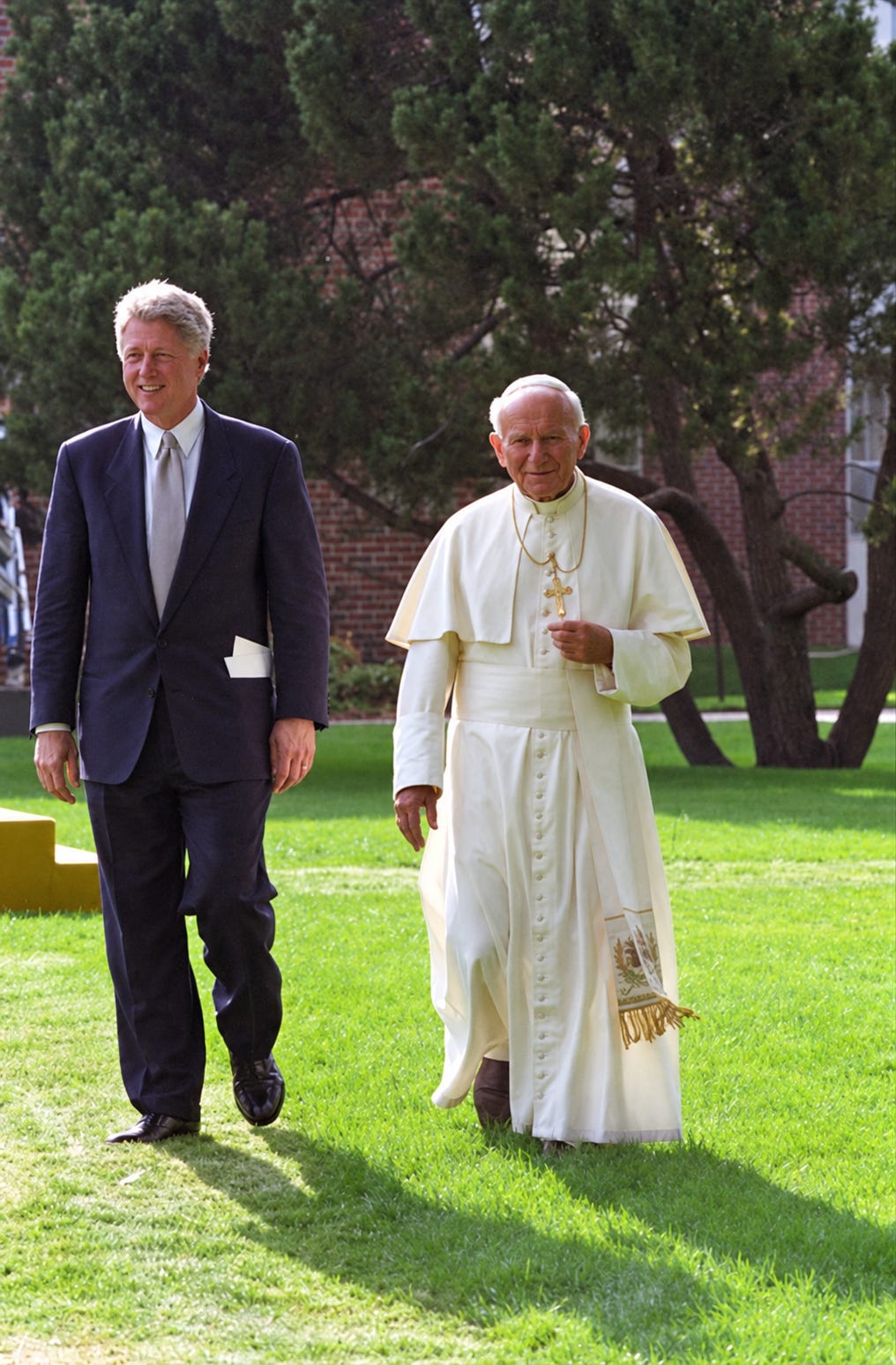
Seven years on, the theologians have supplied the definition, and they cite his successor in doing it.
Leo’s Fourteen Months
Leo’s own record opens on July 9, 2025, in the gardens of Castel Gandolfo, where he celebrated Mass with the Roman Missal’s newly approved formulary for the care of creation. “We must pray for the conversion of many people, inside and outside of the church, who still do not recognize the urgency of caring for our common home,” he preached that morning.
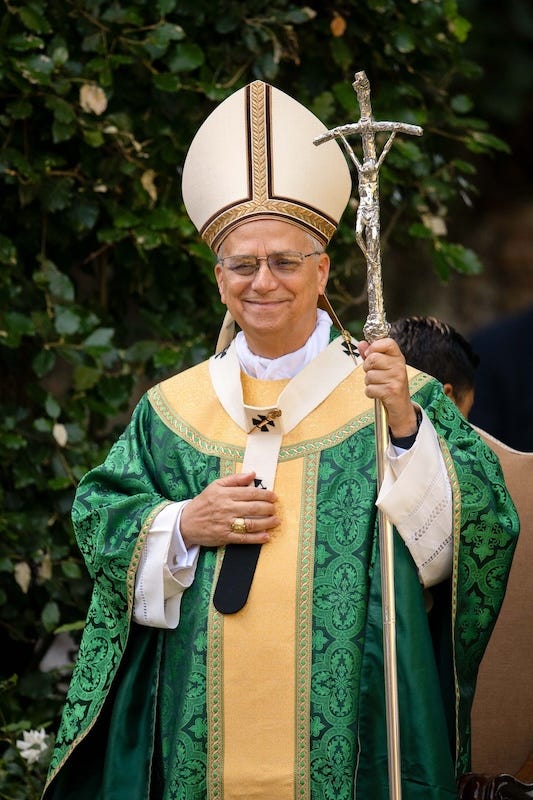
He returned to those hills on Sept. 5 to inaugurate Borgo Laudato Si’, the ecology center Francis founded on the papal estate. On Oct. 1, at a conference where Arnold Schwarzenegger called him an “action hero,” Leo blessed a block of Greenland glacier ice and quoted Francis’s complaint that some “ridicule those who speak of global warming.”
“God will ask us if we have cultivated and cared for the world that he created,” he said that day. In November he sent a video message to church leaders from the Global South, who had gathered in Belém, Brazil, during the COP30 summit, warning that “creation is crying out in floods, droughts, storms and relentless heat.”
This Sept. 1 he was back in the Castel Gandolfo gardens for another Mass, preaching that “it is not yet too late.” He spent his 71st birthday, Sept. 14, opening a water exhibit at the Vatican Library.
What Washington Did in the Meantime
Donald Trump told the United Nations on Sept. 23, 2025, that climate change is “the greatest con job ever perpetrated on the world.” His government has governed accordingly.
The Environmental Protection Agency revoked the 2009 endangerment finding on Feb. 12, pulling out the scientific finding that sits beneath federal limits on greenhouse gases. On Aug. 7 the German utility RWE took $1.2 billion from the administration to walk away from offshore wind leases, which brought the bill for cancelled wind farms to $3.93 billion, by TechCrunch’s count.
Eleven days later the Agriculture Department proposed rescinding the Roadless Rule that shields 44 million acres of national forest. Public comment closes Monday.
Coda wrote that the remedy is a conversion which “must first and foremost find expression on the spiritual and religious levels.”
A Church praying for water is tending souls (Cernovich and Donnelly have it backwards), beginning with the soul of whoever turned the water into a commodity.
Leo has already named the question each of us will face: whether we cared for the world God made “for the benefit of all and for future generations, and if we have taken care of our brothers and sisters.”
At Letters from Leo, we stand with Pope Leo XIV and with every Catholic, and every person of goodwill, who believes clean water is God’s gift to all his children.
People are hungry for a faith that takes the whole of creation seriously, from womb to tomb. Powerful men are mocking a prayer for the thirsty, and this community exists to answer them with the Church’s actual teaching.
If you believe this movement matters — Catholics and people of goodwill defending our common home, and the poor who suffer first when it is plundered — I am asking you to join us.
If you’d like to invest in our mission, here are three ways you can help:
Subscribe as a paid member to receive exclusive posts about the life and formation of Pope Leo and help sustain this newsletter.
Donate with a one-time gift to fuel this project’s mission.
Share this post (and Letters from Leo) with a friend who might enjoy it.
Paid subscribers receive our biographical series on Pope Leo’s Life & Formation, along with the Sunday Scripture Reflection Series; our investigative archive, including The Epstein-Bannon Investigation, is open to them too.
Whether you give $0, $5, $50, $500, $1,000, or more, your presence here matters — no matter your faith or your politics.
Thank you for reading. I’ll see you on the road.

EVERY SINGLE TIME I see Pope Leo XIV face...it gives me HOPE..and makes me SMILE!
So sad the blindness that causes such destruction