


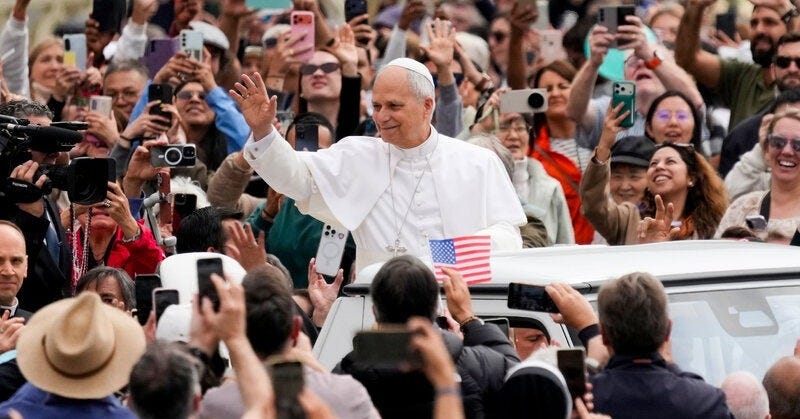
Thank you for reading! Letters from Leo is a reader-supported publication and the fastest-growing Catholic community in the country. To receive new posts and support this movement, consider becoming a free or paid subscriber.
Dear friends,
On this last night of September, I want to tell you about a street corner in Louisville.
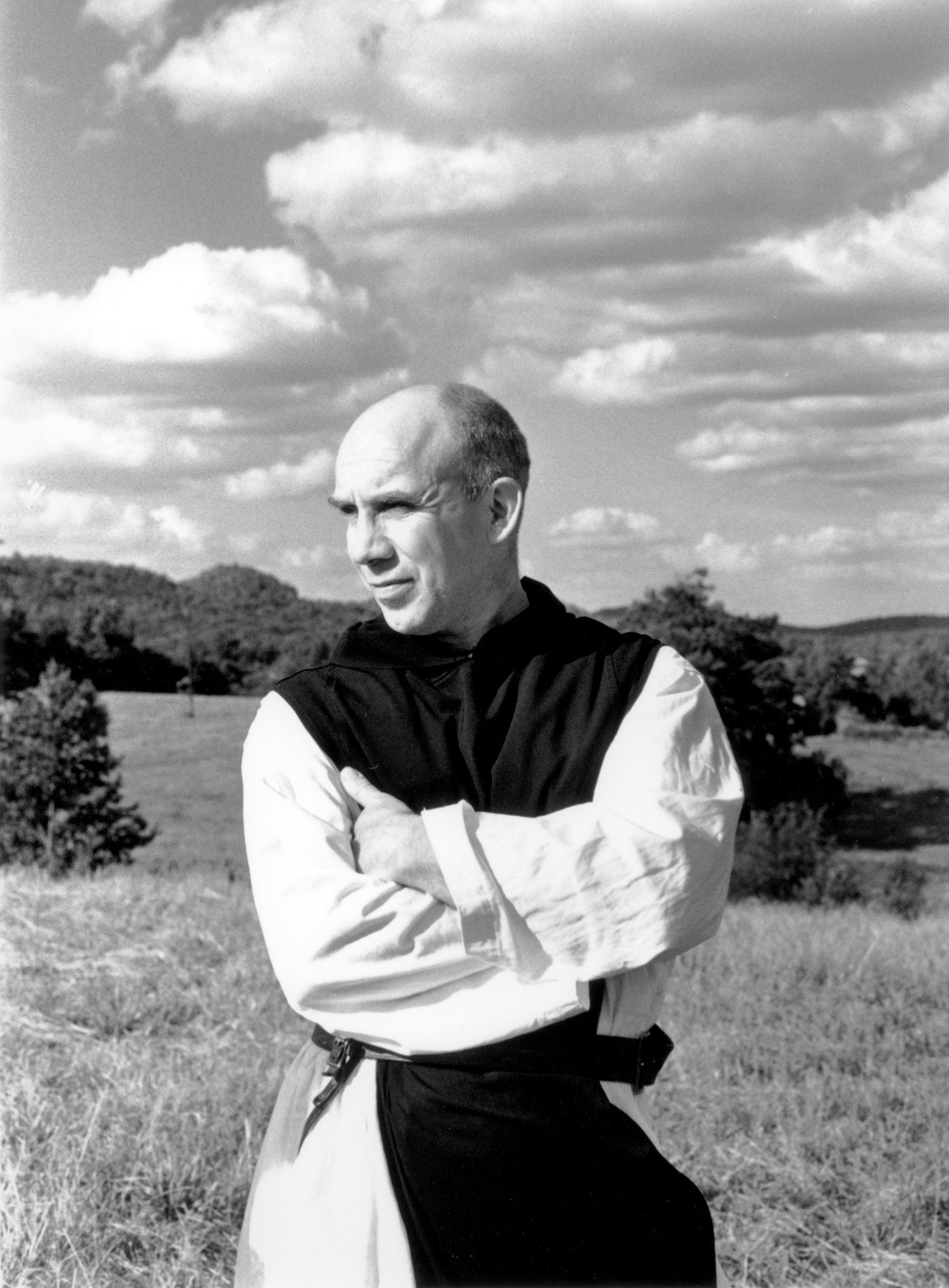
On March 18, 1958, a Trappist monk named Thomas Merton left the Abbey of Our Lady of Gethsemani, outside Bardstown, Kentucky, to run errands in the city. He was standing at the corner of Fourth and Walnut, in the middle of the shopping district, when something broke open in him.
Watching ordinary people hurry past, Merton was overwhelmed by the realization that he loved every one of them. He later wrote that there was no way to tell people they were all walking around “shining like the sun.” (A state historical marker stands on that corner today.)
I first heard that story as a teenager in Tennessee. Southern Catholicism is a strange and wonderful thing, a minority faith in Evangelical country, and the priests and nuns who reared me read Flannery O’Connor and Merton the way other people read the sports page. One of those priests, Father Mark Beckman, put Merton in my hands. Pope Francis made him the bishop of Knoxville in 2024, and I still owe him for the gift.
Merton taught me that faith and action can’t be pulled apart. The same monk who spent his days in silent prayer wrote against nuclear war and segregation from a hermitage in the Kentucky hills, and Wendell Berry, the farmer-poet we lost this month, was among the friends who climbed the hill to see him.
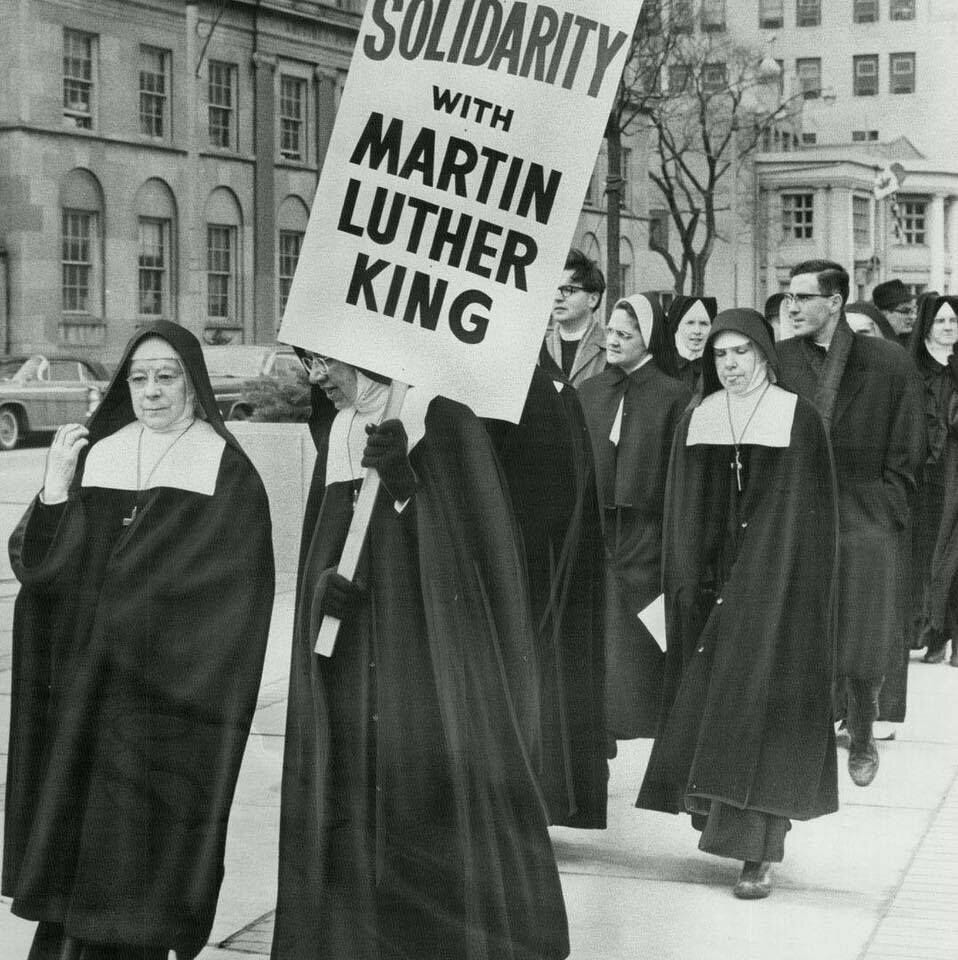
He had company. Catholics in the twentieth-century South were often pioneers for justice, and they paid for it. Bishop Vincent Waters of Raleigh desegregated his parishes in 1953, a year before Brown v. Board of Education. In 1962, Archbishop Joseph Rummel of New Orleans excommunicated three segregationists, among them the political boss Leander Perez, for fighting the integration of Catholic schools.
When Pope Francis addressed Congress in September 2015, he held up four Americans as models: Abraham Lincoln, Martin Luther King Jr., Dorothy Day (whose cause moved closer to sainthood last month under Leo), and Merton, whom Francis praised as “a promoter of peace between peoples and religions.”
I tell you all this because, in my own small way, this community has given me a taste of what Merton felt at Fourth and Walnut. Late at night, reading your comments and emails, I see a crowd of people shining like the sun.
In dark times, you are a source of light. Together we are standing up to authoritarianism and fighting for the values of the Gospel in the United States, under the leadership of the first American pope.
I have spent my entire adult life in politics. I’ve worked campaigns for fifteen years, I ran for Congress in 2020, and I believe elections matter enormously. Still, politics is always downstream of something deeper.
What a people believes about the human person (its moral gestalt, if you like) settles most elections long before anyone counts a ballot.
That is why the coming months matter so much.
On Nov. 3, thirty-four days from now, Americans will vote in the first nationwide election of Leo’s pontificate, and by the morning after, the 2028 presidential season will be in full swing. We are coming upon one of the most critical junctures in our nation’s history, with the future of our posterity at stake. This is a values debate, so deal us in.
I have a dogmatic belief that you and I are living through a providential moment. Just as God raised up a pope from behind the Iron Curtain to help defeat communism, he has raised up a pope from America to help defeat global authoritarianism.
Look at what Leo did in France this week and tell me he isn’t the leader of the free world.
Imagine what a community like ours — hopeful, formed, and engaged — could do for a country starving for moral clarity.
None of that will happen automatically, and none of it can happen without you.
Letters from Leo is 100% reader-supported.
There’s no corporate backing or institutional sponsor, and no billionaire is waiting in the wings; it’s just you and this growing community, choosing to keep this work alive.
So on this last day of September, if this project has brought value to your life or to someone you love, I’m humbly asking for your support. This work only moves forward when people who care about truth, conscience, and the common good decide it’s worth carrying.
The late Pope Francis called the Church to a revolution of tenderness.
Pope Leo XIV’s witness asks us to carry that revolution into American politics, culture, and media, offering a different way of being a nation in an age slipping toward cruelty and authoritarian reflex.
To help us build that future, here are three concrete ways you can support this mission:
Subscribe as a paid member to receive exclusive posts, including the biographical series on Pope Leo’s Life & Formation and the Sunday Scripture Reflection Series, and help sustain this newsletter.
Donate with a one-time gift to fuel this project’s mission.
Share this post (and Letters from Leo) with a friend who might enjoy it.
If you can’t subscribe or donate, I ask those of you who pray to pray for us. Hold one another up as well, along with Pope Leo, who carries a heavy cross, and the nation that gave him to the world.
Whether you give $0, $5, $50, $500, $1,000, or more, your presence here matters, no matter your faith or your politics.
Merton walked back to Gethsemani after that afternoon in Louisville and kept writing for another decade, convinced the glory he saw on Fourth Street belonged to everyone.
I believe it belongs to this community too. Let us rise up, fellow travelers, and be on our way.
Thank you for reading. I’ll see you on the road.

PS — If you’d like to make a larger gift through a credit card, check, family foundation, or donor-advised fund, reply to this email or DM us. We’ll gladly help you invest in our mission.
Beautiful! 😇
Great article