


Thank you for reading! Letters from Leo is a reader-supported publication and the fastest-growing Catholic community in the country. To receive new posts and support this movement, consider becoming a free or paid subscriber.
More than 1,900 of you have already signed our get-well letter to Pope Leo XIV, so please add your name before he enters the hospital on Tuesday; Letters from Leo will deliver every note to the Vatican on behalf of our community.
On the night of March 14, 1891, a mob broke into the parish prison in New Orleans and killed 11 men, most of them Italian immigrants. Several had just been acquitted of murdering the city’s police chief, and a few had never stood trial at all.
Some of the city’s most prominent citizens marched with the mob. A grand jury declined to name a single killer, and no one was ever punished.
The next year, President Benjamin Harrison proclaimed the first national Columbus Day. The 400th anniversary of the voyage gave him a way to calm a diplomatic crisis with Italy and to court Italian American voters before the 1892 election. Italy had recalled its ambassador over the killings, and Washington paid $25,000 to the families of three victims who were Italian citizens.
Harrison’s proclamation hailed Columbus as “the pioneer of progress and enlightenment.” New Orleans waited until 2019 for a mayor, LaToya Cantrell, to apologize.
So the holiday we mark today began as a peace offering to a despised people. Columbus himself deserves an honest reckoning, and the suffering of the Indigenous peoples he met belongs in that history. My concern today lies with the immigrants who made his day their own, and with what their story asks of American Catholics now.
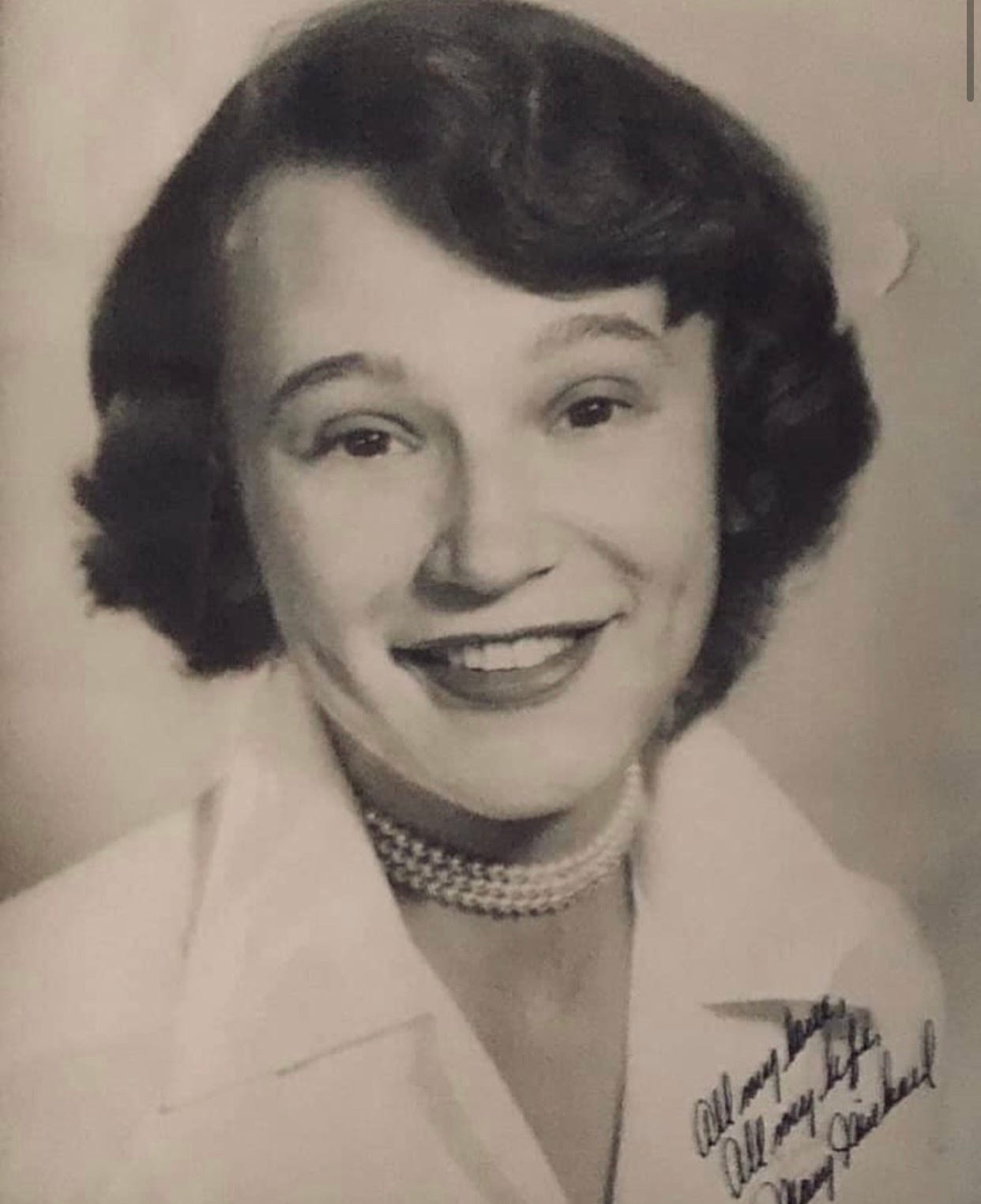
My family was among them. My grandmother, Mary Michael Fiorella, grew up in a devout Italian Catholic family (her photograph sits at the top of this letter). For her generation, being Italian and being Catholic were nearly the same thing.
My mother was raised a cradle Catholic, Irish on her father’s side and Italian on her mother’s.
Italians did not arrive in this country as white people, at least not in the eyes of many Americans who received them. In Louisiana’s sugar fields, Brent Staples wrote in the New York Times, Italians were often marked as Black because they took the work Black laborers did. Some were shut out of schools and labor unions, and in some churches they sat in the pews set aside for Black worshipers.
When a mob in Tallulah, Louisiana, lynched five Sicilian produce vendors in 1899, a Harper’s Weekly correspondent explained the logic. The Sicilians traded with their Black neighbors on equal terms, so they could “hardly be classed as ‘white men.’” To the men holding the rope, my grandmother’s people were colored, and they were other.
That sense of otherness has stayed with me as the mark of what it meant to be Catholic in America. To be Catholic here was to belong to something of a different kind, answering to a pope across the ocean and praying a Mass in Latin, which Protestant neighbors read as divided loyalty.
I learned that early, growing up in the South. In 1929, when Catholics in Murfreesboro, Tennessee, began building the county’s first Catholic church, the local Ku Klux Klan staged a torchlight march in hoods and robes to protest it. The church was St. Rose of Lima, my home parish, and as I wrote in January, its shadow lingered long after the marchers went home.
I was reminded often, as a boy, that the Klan never stopped at Black Americans. It came for Catholics and Jews as well. Our otherness ought to bind us to minorities of every kind, because the powerful have always understood something the oppressed sometimes forget: to the powerful, the oppressed are always scarier when they work together.
That prejudice has not gone away. Father James Martin, S.J., asked in America magazine back in 2000 whether anti-Catholicism had become “the last acceptable prejudice”, and he concluded that it plainly still exists.
This April, President Trump attacked Pope Leo XIV on Truth Social, calling him “WEAK on Crime, and terrible for Foreign Policy.” Within days, Vice President JD Vance was telling the first American pope to stay out of American politics. As I argued this spring, MAGA is only the newest face of a very old American hatred.
We are no longer the struggling little engine that could. Catholics hold the vice presidency and several seats on the Supreme Court. Climbing out of the outsider’s seat carries its own temptation, though, which is to forget where we came from and close the door behind us.
The strangers at our door today are largely Catholic themselves. About half of Latino immigrants in this country are Catholic, according to Pew, and Hispanics make up more than a third of American Catholics. They are our grandparents arriving again, speaking a different language at the same altar rail.
When ICE agents killed Lorenzo Salgado Araujo in Houston and Johan Durán Guerrero in Maine this summer, they killed two Catholic men on their way to work.
Scripture leaves no room for amnesia here. In Leviticus, God commands Israel to love the stranger as itself, “for you were strangers in the land of Egypt.” Cardinal Timothy Dolan, the retired archbishop of New York, put the same truth in American terms this summer: “We are a nation of immigrants.”
On this Columbus Day, I keep returning to the song Mary sang when she hurried into the hill country to visit her cousin Elizabeth. In the Magnificat, which Luke places at the Visitation, Mary proclaims that God “has thrown down the rulers from their thrones but lifted up the lowly.”
The Church prays her canticle every evening at Vespers. Each night, then, Catholics around the world announce that the mighty will not have the last word.
In 1990, the composer Rory Cooney set the Magnificat to an old Irish tune, “Star of the County Down,” and called it “Canticle of the Turning.” A Jewish mother’s prayer carried on an Irish melody, it holds both halves of my family tree in a single hymn. Here it is, performed by Siskin Green for BBC Scotland:
We too were once strangers. My grandmother’s people came here as men and women other Americans called colored and suspect, and the Church held them while the country made up its mind. The migrants crossing our southern border, many of them baptized at fonts like ours, deserve no less from us. In them, if we are honest, we will see ourselves.
The mighty will tell Latino Catholics they do not belong, as they once told Italians in New Orleans and Catholics in Murfreesboro. Mary’s song says otherwise, and so should we.
At Letters from Leo, we stand with Pope Leo XIV and with the immigrant families filling American pews this Sunday, many of them carrying the same rosaries our grandparents carried off the boat.
The powerful would like Catholics to forget where we came from. We belong to a Church that sings Mary’s song every evening and means every word of it, including the line about the lowly.
This is the fastest-growing Catholic community in the country because people are hungry for a faith with a memory. They want a Church that remembers New Orleans and Murfreesboro, and that recognizes its own story in the families at the border.
If you believe this movement matters — Catholics and people of goodwill standing for the dignity of the stranger against a politics of fear — I am asking you to join us.
If you’d like to invest in our mission, here are three ways you can help:
Subscribe as a paid member to receive exclusive posts about the life and formation of Pope Leo and help sustain this newsletter.
Donate with a one-time gift to fuel this project’s mission.
Share this post (and Letters from Leo) with a friend who might enjoy it.
Paid subscribers receive exclusive posts on the life and formation of Pope Leo and every installment of the Sunday Scripture Reflection Series, and their support keeps essays like this one free for everyone.
Whether you give $0, $5, $50, $500, $1,000, or more, your presence here matters — no matter your faith or your politics.
Thank you for reading. I’ll see you on the road.

I too try to spread this truth about our heritage every time Columbus Day comes around. In a town nearby they refer to it as Italian American appreciation day. That’s ok with me
Beautiful, and for me, personal. My Dad was born in Sicily. My Mom’s family was also Sicilian. I grew up grounded in my cultural heritage and in Catholicism. We always knew we were somehow “different.” The foods we ate, the way we celebrated holidays, the Sicilian dialect that all of the adults spoke. But my Grandparents were proud to be American citizens, and so were my parents, and I remember lively political debates (that I didn’t understand). My Dad was a WWII veteran, and when he came home and looked for a job he was greeted with signs that said “Italians Need Not Apply.” So I get it. This “othering” of people who just want a better life for themselves and their children is criminal, and EVERYONE in this country , except the Indigenous peoples, needs to remember that we were all immigrants, and we are all God’s children.
As ever, I am praying for Pope Leo, especially now in his time of need. His own family is an outstanding example of what our different cultural heritages have brought and continue to bring to this country. Gid bless us all.