


Thank you for reading! Letters from Leo is a reader-supported publication and the fastest-growing Catholic community in the country. To receive new posts and support this movement, consider becoming a free or paid subscriber.
On Saturday evening, a post on X stopped me mid-scroll. Its language was incendiary, but the observation underneath it was striking: fifteen years ago, the Catholic Church was known around the world for the systematic sexual abuse of children and its cover-up, and today much of the world sees it as humanity’s moral conscience.
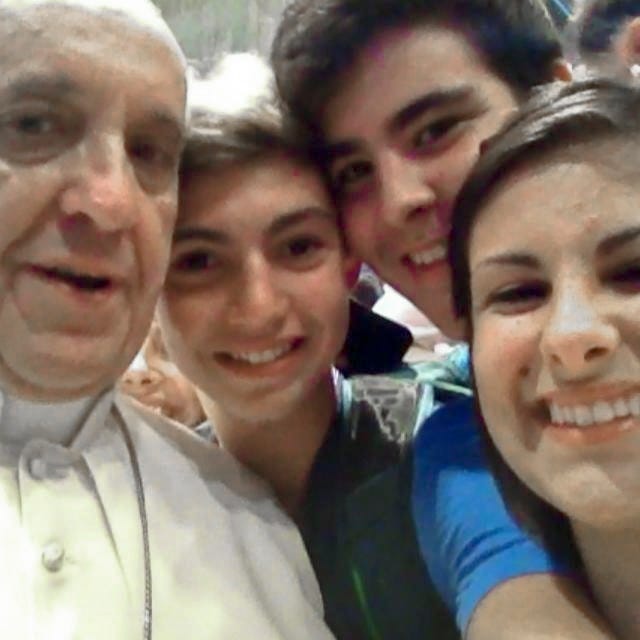
Set the language aside and the post is directionally correct, so I quote-tweeted it with a selfie of Pope Francis beside the man who would succeed him, Robert Prevost. More than 185,000 people have seen it since.


So let me say it plainly, on a Sunday night in October: the Catholic Church is back.
Fifteen years ago, I would not have believed that sentence. The abuse revelations that broke open in Boston in 2002 were the prologue to my young adulthood, and what wounded me most was how the Church’s leaders handled them. In 2009 the Murphy Report showed how the Archdiocese of Dublin had protected abusers for decades.
Then, on Easter Sunday 2010, Cardinal Angelo Sodano, the dean of the College of Cardinals, stood in St. Peter’s Square and assured Pope Benedict XVI that the faithful would not be swayed by “the petty gossip of the moment.” It was one of the lowest moments of my faith life.
That spring I was a college student abroad, living mostly in Rome, with stretches in Paris and Spain. I have rarely felt the loneliness of my faith the way I did in those months, when the Church looked to me like an institution whose days had passed it by.
The feeling followed me home. After I graduated from Xavier University, I moved to Washington in 2011, and being a young Catholic (a young Catholic Democrat, no less) in that city was a solitary experience.
What happened over the next fifteen years has felt like a resurrection, and Catholics know something about those. Getting to witness it, and even to play a small part in it, has been one of the great joys of my life. I see three causes behind it, and most people forget the first one.
Benedict the Meek
Benedict XVI was the pope of my coming of age. He was elected the spring I turned 16, and he left the Chair of Peter a few weeks before I turned 24. I did not agree with every decision he made, but I defended him, and I meant it.
In February 2013, in one of my first op-eds, I wrote for The Washington Post that young people could listen to this quiet man and believe him. A saying went around Rome in those years: young people came to St. Peter’s Square to see John Paul, but they came to listen to Benedict.
I was one of the listeners. His first encyclical, Deus Caritas Est, taught me that being a Christian begins with “the encounter with an event, a person,” and I have carried that line with me ever since.
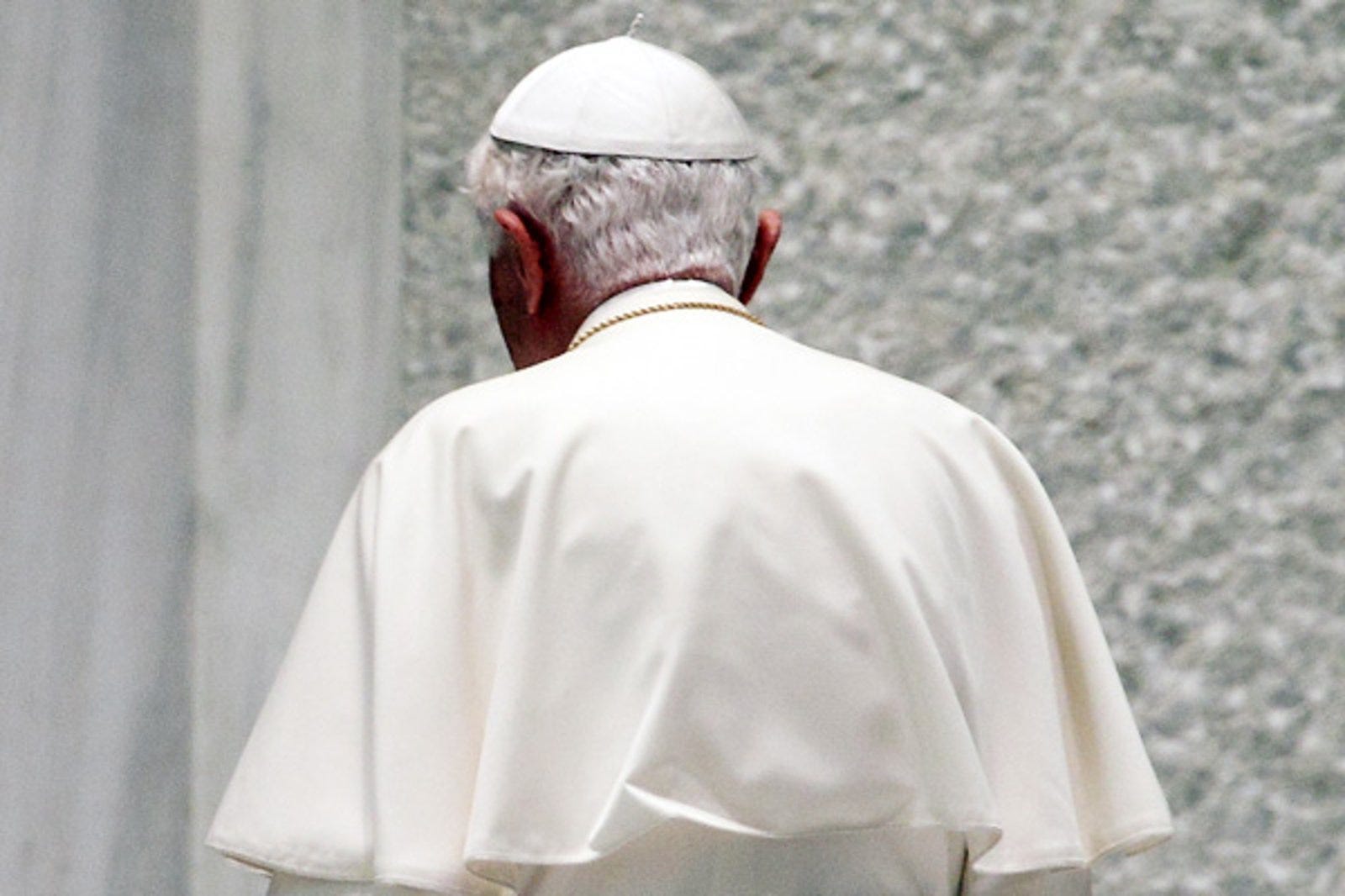
His greatest lesson came when he walked away. On Feb. 11, 2013, he announced he would become the first pope in nearly 600 years to resign, and I still believe it may be the humblest act any pope has ever performed.
A year later, with Francis freshly named Time’s Person of the Year, I wrote in that magazine that anyone who thanked God for the Francis Revolution owed thanks to “its soft-spoken founder: Benedict the Meek.” His choice to let go set everything after it in motion.
A papacy with the windows open
Francis took the papacy and made it human. He turned down the papal apartments for a room in the Casa Santa Marta guesthouse, and on Aug. 28, 2013, he posed with teenagers from the Diocese of Piacenza inside St. Peter’s Basilica for the first selfie in papal history.
Asked about gay priests on the flight home from Rio in July 2013, he answered, “Who am I to judge?” He spoke off the cuff in morning homilies and airplane press conferences, and he stripped away the trappings of the office until it resembled the world we actually live in.
For the first time in my adult life, people outside the Church wanted to hear what a pope had to say.
The friar from Chiclayo
The second gift Francis gave us was his eye for an Augustinian friar from the South Side of Chicago.
In November 2014, he sent Robert Prevost to run the Diocese of Chiclayo in northern Peru, and he named him its bishop the following September. (I have written about how Peru made Pope Leo, and those years shaped everything.)
In January 2023, Francis brought him to Rome as prefect of the Dicastery for Bishops, the office that helps the pope choose bishops for much of the world.
That job gave Prevost a working knowledge of the global episcopate few churchmen have. Francis made him a cardinal that September.
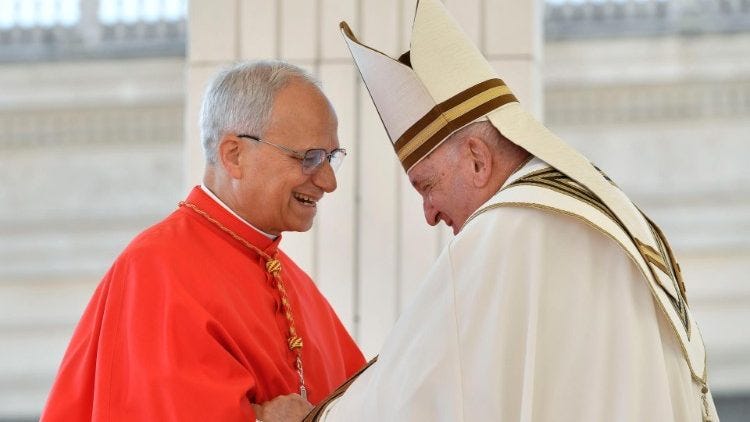
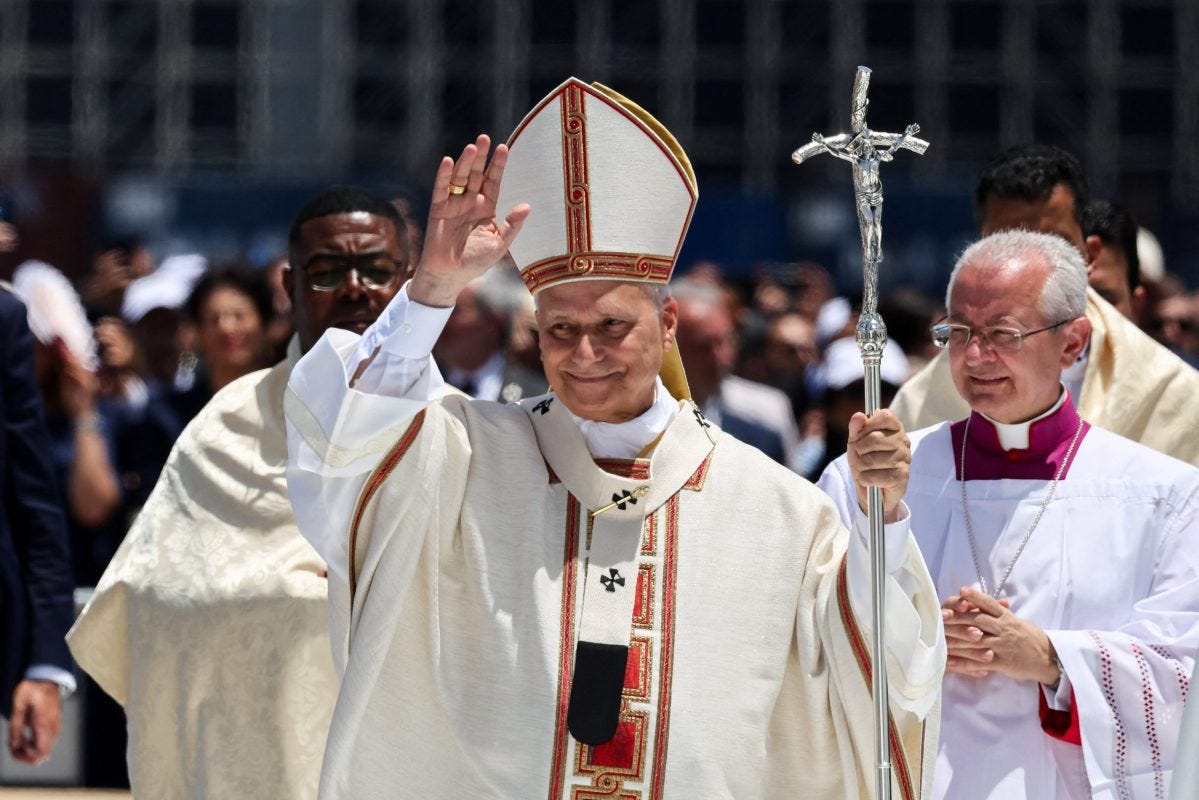
In one of the final acts of his pontificate, on Feb. 6, 2025, Francis elevated Prevost to the order of cardinal bishops, the highest of the three ranks in the College of Cardinals. Its members hold the ancient sees around Rome (Prevost received Albano), and the dean of the college is chosen from among them. Eight days later, Francis entered Gemelli Hospital.
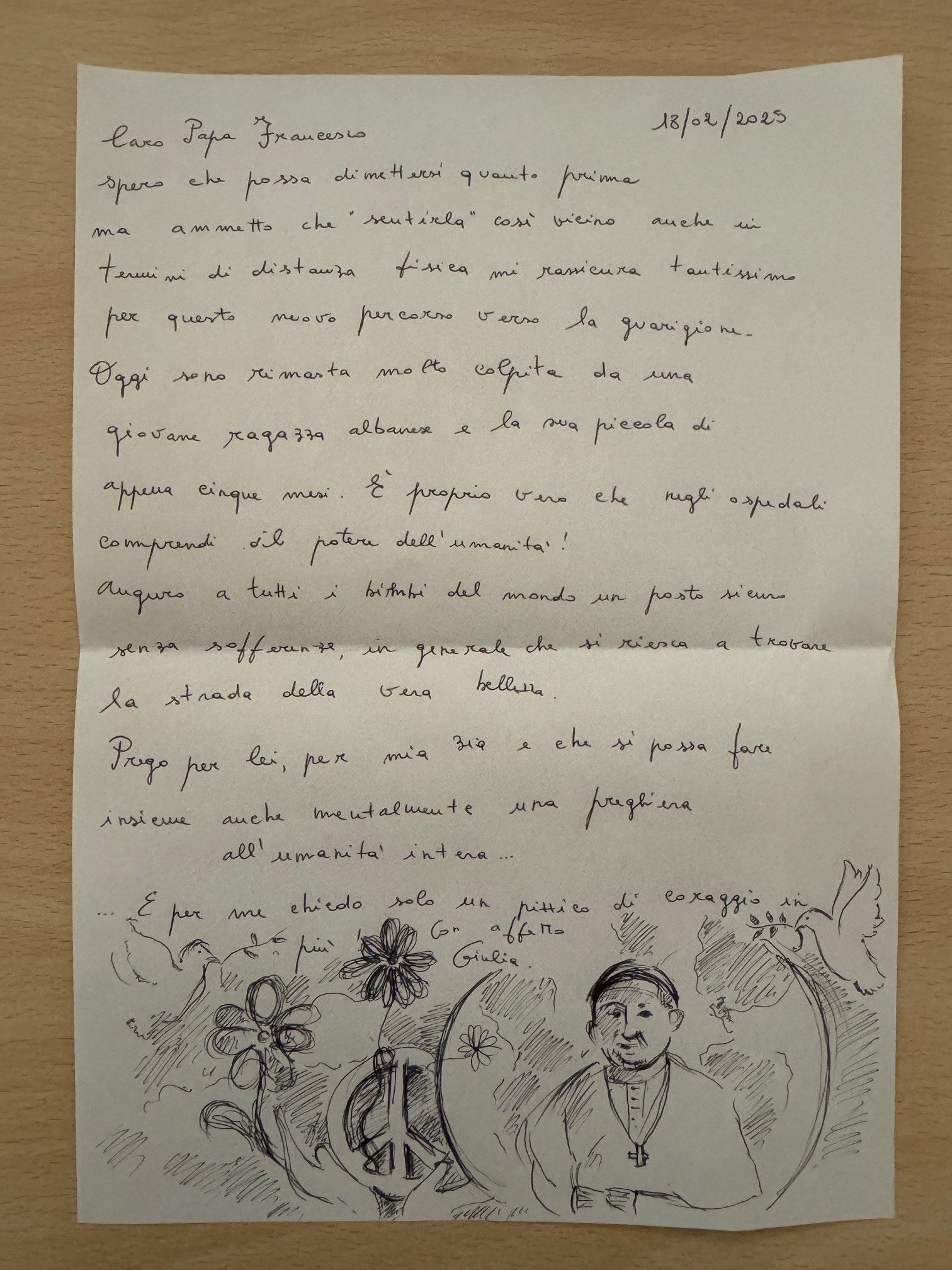
The cardinals elected Prevost pope on May 8, and Catholics give the Holy Spirit the credit. Francis, for his part, had made sure the electors knew his name. You can read the full story of the friendship between Leo and Francis in our archive.
The leader of the free world
Seventeen months into his pontificate, Leo has made the Catholic Church the moral voice the world turns to on artificial intelligence. His encyclical Magnifica Humanitas came out in May. At UNESCO in Paris on Sept. 25, he warned that “while ‘intelligence’ is attributed to computational systems, we struggle to recognize the inalienable dignity of human persons.”
Three days later, on the papal plane home from Metz, he answered Nvidia’s Jensen Huang over AI regulation on the same day he read Huang’s claims about guardrails.
Pope Leo XIV answers a question about artificial intelligence and Nvidia’s Jensen Huang aboard the papal plane home from Metz on Sept. 28, 2026.
On Friday, he told artists at the Vatican there is “an ontological difference” between their work and what a machine can generate. “Algorithms lack the spark of humanity,” he wrote on X that morning, and the post has since drawn more than 24 million views, making it, as I noted earlier today, the most viewed papal tweet of all time. Leo went viral this week for defending humanity against the excesses of Silicon Valley, and the response shows how hungry people are for someone willing to do it.
Back in Paris on Sept. 26, 800,000 people filled the Champs-Élysées to see him. As I wrote last week, Pope Leo XIV is the leader of the free world, a job Washington has left vacant, and nothing in the days since has changed my mind.
The moment from France I keep returning to happened at Lourdes. Sixteen years after Sodano waved the scandal away as gossip, the first American pope met privately with survivors of clerical abuse, and that same weekend he urged France’s bishops to “acknowledge failings.” A Church that has come back looks like that.
Semper reformanda
We should not be triumphalist about any of this. The Church is a blessed institution, and it is also full of sinners, beginning with the one writing to you. Francis spent twelve years reminding us that we are seekers of the Lord, and Leo has taken up the same call in his own quiet voice.
Something else has become clear to me over these fifteen years. The fruit of the Second Vatican Council is starting to come to bear. No one could have imagined the Church of the 1950s having the reach the Church of the 2020s has, with an American pope the whole world stops to hear on war and on the machines we are building.
Scholars often say it takes a century to understand what an ecumenical council has done. Vatican II closed in 1965, so we are only now starting to understand it.
Fulton Sheen saw this coming. On Firing Line in January 1970, he defended Vatican II to William F. Buckley Jr. as the first truly global council in the Church’s history. Not one bishop from Asia or Africa sat at the First Vatican Council in 1870, Sheen told him, while at the Second, “61 percent of the bishops were from Americas, Asia, and Africa.” When Buckley asked why the pews weren’t filling, Sheen answered, “It’s going to take a long time for the yeast to work through the dough.”
We can rejoice that the yeast is finally working. A great deal has changed since that Easter in 2010, and the change is not finished. The old phrase Ecclesia semper reformanda, the Church always in need of reform, is the best description of us I know, and I pray we keep living up to it in the years to come.
At Letters from Leo, we stand with Pope Leo XIV, and with every Catholic and every person of goodwill who has watched this Church climb out of its darkest years and still believes it has something to give the world.
That climb was never ours to boast about. It began when an old German theologian chose to step aside. Francis threw the doors open after him, and now a friar from Chicago, schooled by the poor of northern Peru, carries the work forward. Our part is to keep walking with them, honest about our sins and unafraid to hope.
This is the fastest-growing Catholic community in the country because people are hungry for a Church that tells the truth about itself and shows up for human dignity. They see that Church in Leo, and they want to belong to it.
If you believe this movement matters, Catholics and people of goodwill standing together for a Church that is always reforming and a world that stays human, I am asking you to join us.
If you’d like to invest in our mission, here are three ways you can help:
Subscribe as a paid member to receive exclusive posts about the life and formation of Pope Leo and help sustain this newsletter.
Donate with a one-time gift to fuel this project’s mission.
Share this post (and Letters from Leo) with a friend who might enjoy it.
Paid subscribers get our series on Pope Leo’s Life & Formation, including his years in Chiclayo and his friendship with Francis, along with our coverage of how Pope Leo Takes On AI, our Sunday Scripture Reflection Series, and the investigations you won’t read anywhere else.
Whether you give $0, $5, $50, $500, $1,000, or more, your presence here matters — no matter your faith or your politics.
Thank you for reading. I’ll see you on the road.

Well said. The Church is speaking with a moral clarity in a world where such clarity is in short supply.
He also met with survivors when he was in Spain so glad… love this Pope!