

“Out of Many, One” — On the Eve of America’s 250th, Pope Leo XIV Defends the Diversity of a Nation of Immigrants
Accepting the Liberty Medal from the Vatican, the first American pope said immigrants made his country “a byword for freedom” — the Bernardin ethic, womb to tomb, aimed at Trump’s Washington. Tomorrow he lands among the migrants of Lampedusa.

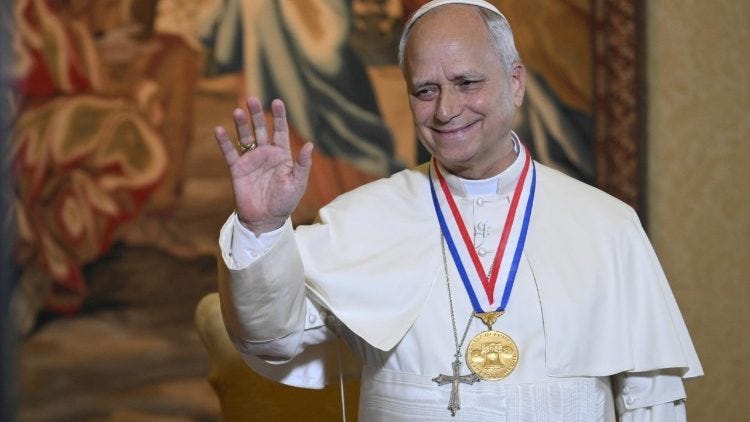
Pope Leo XIV accepted the 38th Liberty Medal from the National Constitution Center on Friday morning, speaking live from the Vatican to the crowd gathered on Philadelphia’s Independence Mall against the backdrop of Independence Hall, where the Declaration of Independence was adopted 250 years ago this weekend.
The Center honored the first American pope for his lifelong work “promoting religious liberty and freedom of conscience and expression around the world.” A delegation had traveled to Rome in April to place the 2026 medal in his hands during a private audience; Friday brought the formal acceptance, timed to the eve of the nation’s semiquincentennial and staged with the City of Philadelphia as part of its Independence Week celebrations.
He joins a roll of laureates that includes Volodymyr Zelensky, Ruth Bader Ginsburg, John McCain, John Lewis, the Dalai Lama, Malala Yousafzai, Hillary Clinton, and George W. and Laura Bush. Last October the medal went to the Broadway musical Hamilton and Ron Chernow, the historian whose biography inspired it.
Villanova University, where a young Robert Prevost took his mathematics degree in 1977, helped shape this year’s program.
And the pope opened his remarks with a sentence no previous pope could have spoken: “As a son of this great country, founded by courageous men and women who dreamed of liberty and of a better life for themselves and for their children, I join you in asking God’s blessings upon America’s future.”
Donald Trump’s name appears nowhere in the address. Read against the record of the administration now governing the pope’s homeland, many lines land as a challenge.
The theological core arrived in the second paragraph. Human dignity, Leo said, “precedes the establishment of any State,” and its custody “constitutes its very purpose.” If dignity comes before the state, then no executive order can cancel it — a syllogism with sharp edges in a season of mass deportation.
It was the resolve to realize the founders’ vision, Leo said, “that made America a byword for freedom, as the country opened its doors to successive waves of immigrants, enabling them and their children to play their part in shaping the future of the nation.”
He said this to a country whose government detained a Texas nun walking to Sunday Mass, and whose vice president publicly argued on Fox News the pope should learn from Donald Trump on immigration.
He prayed for a public discourse “marked by moderation, respect for the views of others and an ongoing effort to find common ground in promoting the cause of peace and reconciliation, at home and abroad,” and he commended the nation’s future “to the One who is himself the source of true freedom and lasting peace, the One whose very name is Peace.”
Those words arrived months into an American war on Iran that Leo has met with the flat declaration that “no war is blessed by God.”
Leo gave the right to life pride of place — the first right the founders enshrined, “for no one who is deprived of life can enjoy liberty or pursue happiness.”
A country’s vitality, he argued, “is deeply tied to the value it affords to human life in every form and condition,” and reverence for so precious a gift should inspire “laws that recognize and safeguard the gift from the moment of conception to natural death.”
Then he offered his own metric for the thing Washington claims to be restoring: “the moral greatness of a nation is manifested, above all, in its capacity to support, protect and cherish the lives of all, especially the most vulnerable and those whose worth is questioned.” Readers who followed his Barcelona indictment of the economy that kills will recognize the standard — poverty ranks among the threats to life, and economic justice belongs to the pro-life cause.
American Catholics of a certain generation know this architecture by name. In December 1983, Cardinal Joseph Bernardin of Chicago stood before an audience at Fordham University and called for a “consistent ethic of life” — a single moral fabric binding abortion, capital punishment, the arms race, and the abandonment of the poor, with protection owed at every stage from womb to tomb.
Leo finished his divinity studies at Catholic Theological Union in Hyde Park in 1982, the year Bernardin arrived to lead the Church in Chicago, and the ethic that the archbishop preached, which itself became the air a generation of Chicago Catholics breathed.
Leo has claimed that inheritance in his own voice. Accepting an honorary doctorate at the Universidad Católica Santo Toribio de Mogrovejo in Chiclayo in 2023, then-Cardinal Prevost built his whole address around Bernardin’s Fordham speech: “a Catholic cannot truly claim to be ‘pro-life’ by maintaining a stance against abortion while simultaneously advocating in favor of the death penalty,” he said, and those who champion the unborn “must be equally visible in supporting the quality of life” of the elderly, the hungry, the homeless, and undocumented immigrants.
Mike Lewis of Where Peter Is published the full English translation of that address and traced its through-line to this pontificate.
The formation held. Last September, asked about a Chicago award for Senator Dick Durbin, Leo told reporters that “someone who says I’m against abortion but is in favor of the death penalty is not really pro-life” — and then extended the test to “the inhuman treatment of immigrants in the United States.” On Friday, he pressed the same ethic into the founders’ Declaration itself as his warrant.
And Leo was explicit about where the country’s strength comes from. America’s forbearers — “men and women of diverse backgrounds, religions and languages” — found in that very diversity “the strength necessary to pursue a better future,” a union he summed up in the motto he handed back to the nation: E pluribus unum — out of many, one.
That defense of American diversity arrives while the administration wields the force of the state against it — executive orders stripping diversity programs out of the federal government, contract-cancellation threats aimed at universities, and legal pressure on private companies that keep their own. The pope blessed e pluribus in the same season Washington is enforcing unum.
The passage doubles as a quiet answer to the Catholic post-liberals in JD Vance’s orbit, who imagine an integralist order with democracy subservient to confessional power.
Leo grounded religious freedom in the First Amendment itself, praised the American tradition of interfaith cooperation, and defended the right to follow conscience “free from fear and coercion.”
A pope formed by American pluralism blessed it before the watching world — and the post-liberal project has no place in that benediction.
As Rocco Palmo noted, Francis loved to hand a crowd three words and let them do the work. Leo’s Liberty Medal triad is there for anyone listening: “moderation” for the public square, “generosity” and “nobility of heart” for the nation itself.
His closing prayer asked that the 250th anniversary “may be the occasion of a solemn recommitment to these ideals that have made America a country that values peace and prosperity, a country characterized by generosity and nobility of heart.”
I am writing this from Lampedusa.
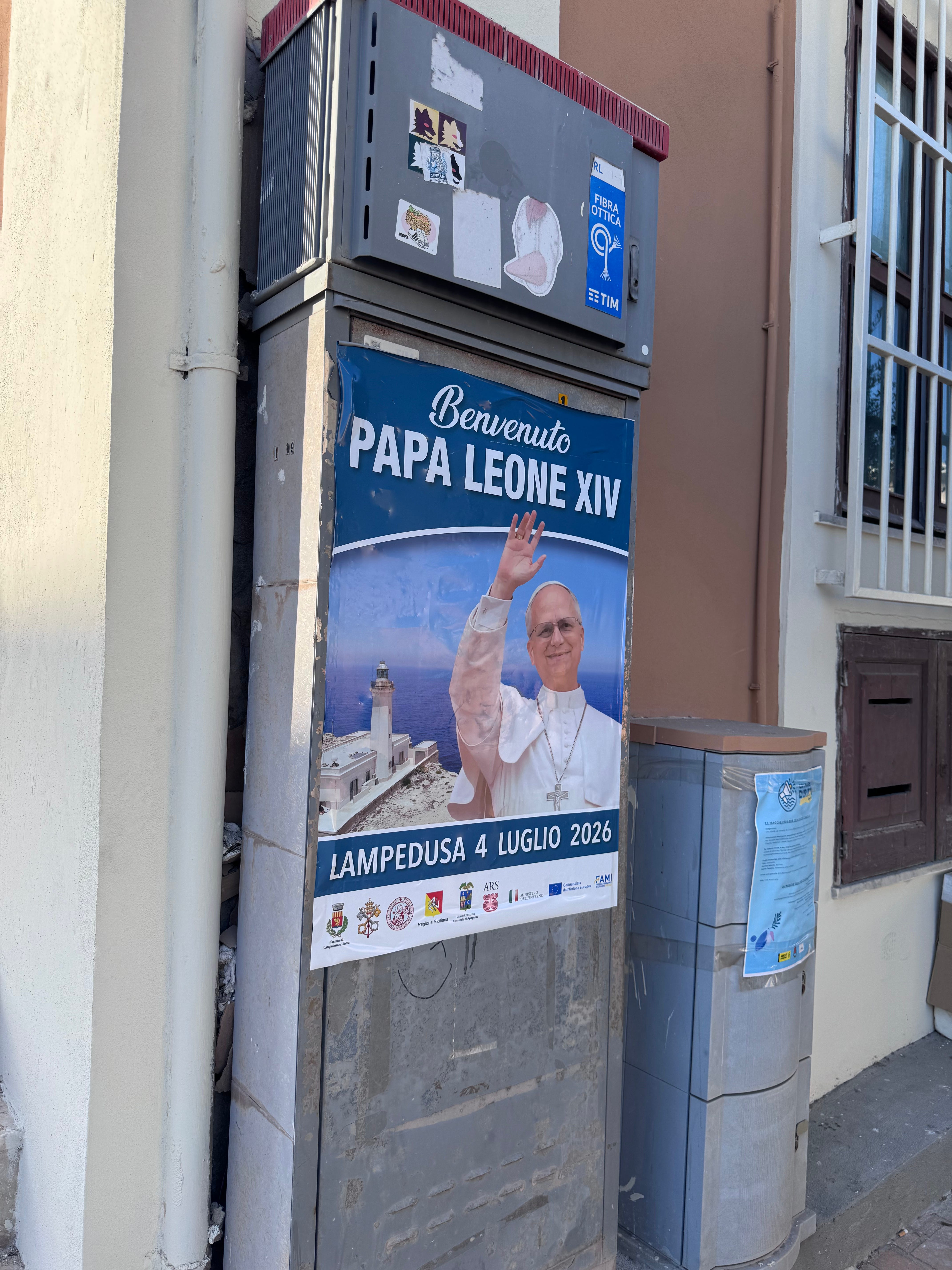
Tomorrow morning the pope will spend the Fourth of July on this speck of Sicilian rock eighty miles from the Tunisian coast — laying flowers on the graves of Africans who drowned trying to reach Europe, praying at the Porta d’Europa, blessing the renaming of a pier for Pope Francis, and celebrating Mass beneath the image of Our Lady of Portosalvo, whose name means “safe port.”
More than 49,500 people landed on this island’s shores last year alone.
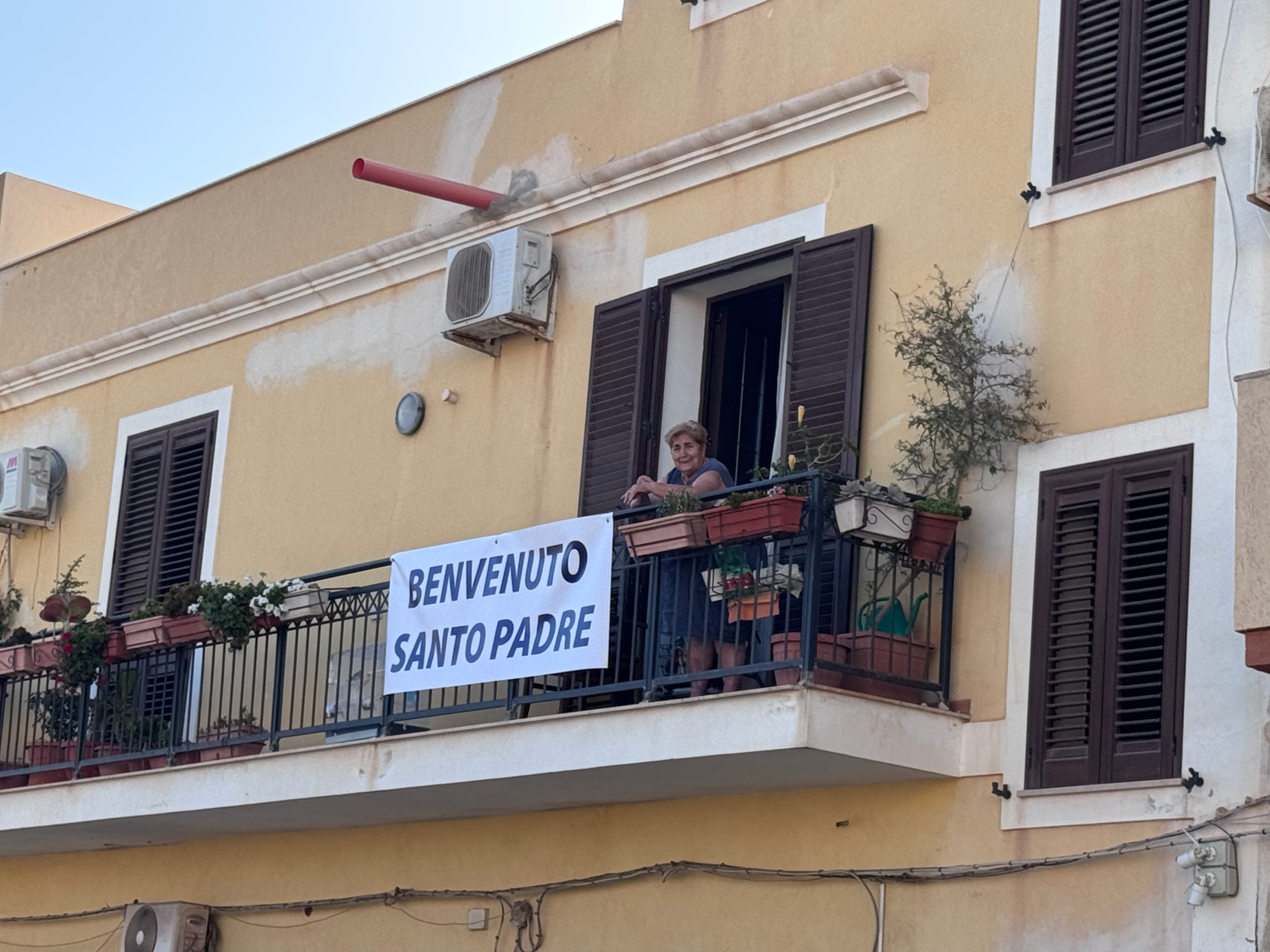
Francis chose Lampedusa for his first journey outside Rome in July 2013, celebrating Mass on an altar built from a migrant boat. Leo has been moving toward this pier for months — he closed last month’s Spain trip at the doorstep of Africa declaring that “all of us are migrants.”
This newsletter has been tracking the road to this island for months. In February I wrote that Leo XIV would skip Washington’s 250th-anniversary celebrations to spend the day at Europe’s most symbolic migrant crossing, and two weeks ago he set the stage for this trip with three words of his own: “enough with the bullying.”
The American press has caught up to the meaning of the itinerary. As the Washington Post and CNN have both reported, this July 4 trip is without a doubt a message to the Trump administration — the Post calls it “a quiet, deliberate counterpoint to the nativism of ‘America First,’” a split-screen staged against the president’s own Independence Day rally.
The two days belong to one argument. An American pope accepted a medal named for liberty, and within a day he will stand on a pier at Europe’s edge beside the people the wealthy world prefers not to see. Bernardin would recognize the itinerary, and somewhere in Washington, someone ought to be taking notes.
At Letters from Leo, we stand with a pope who accepted America’s Liberty Medal by reminding his country that the founders’ promise covers every child, the prisoner on death row, the family in the ICE van, and the migrant in the water.
This community exists because millions of Catholics — and countless people of goodwill beside them — refuse to let human dignity be carved up by party platforms. Leo told Philadelphia that dignity precedes the state; we built this movement on the same conviction, and we report every day on what happens when governments forget it.
This is the fastest-growing Catholic community in the country because people are hungry for something sturdier than rage — for a faith that holds the whole of life sacred, from womb to tomb, on every side of every border.
If you believe this movement matters — Catholics and people of goodwill standing for the whole of human life against a politics of cruelty — I am asking you to join us..
If you’d like to invest in our mission, here are three ways you can help during this Independence Day weekend:
Subscribe as a paid member to receive exclusive posts about the life and formation of Pope Leo and help sustain this newsletter.
Donate with a one-time gift to fuel this project’s mission.
Share this post (and Letters from Leo) with a friend who might enjoy it.
Paid members receive the full biographical series on Pope Leo’s life and formation — including the Chicago years that placed him in Bernardin’s church — along with the Epstein-Bannon investigation, the Pope Leo Takes On AI series, and the Sunday scripture reflections.
Whether you give $0, $5, $50, $500, $1,000, or more, your presence here matters — no matter your faith or your politics.
Thank you for reading. I’ll see you on the road.

Thank you, Papa Leo. May God bless....
Thank you forever Pope Leo...and thank you Christopher for doing an excellent job keeping us informed via Letters from Leo. Celebrate your time in Rome!