


Thank you for reading! Letters from Leo is a reader-supported publication and the fastest-growing Catholic community in the country. To receive new posts and support this movement, consider becoming a free or paid subscriber.
Dear friends —
Before you read today’s essay, one important note:
Anyone who purchases a yearly subscription to Letters from Leo or donates $80 or more from this post will receive a free copy of The Private Diary of Pope Francis, the book Cardinal Víctor Manuel Fernández released around the world today.
This offer is available through tonight, Tuesday, November 24, at 11:59 PM PST.
We have also extended our offer on Armando Lovera’s From Robert to Pope Leo through the same deadline, for anyone who missed it on Sunday.
We have done this six times now, with Gerard O’Connell and Elisabetta Piqué’s conclave book, Christopher Lamb’s American Hope, Elise Ann Allen’s biography, Leo’s own Freedom Under Grace, NPR’s American Pope, and Lovera’s memoir. Many of you joined this community through those books.
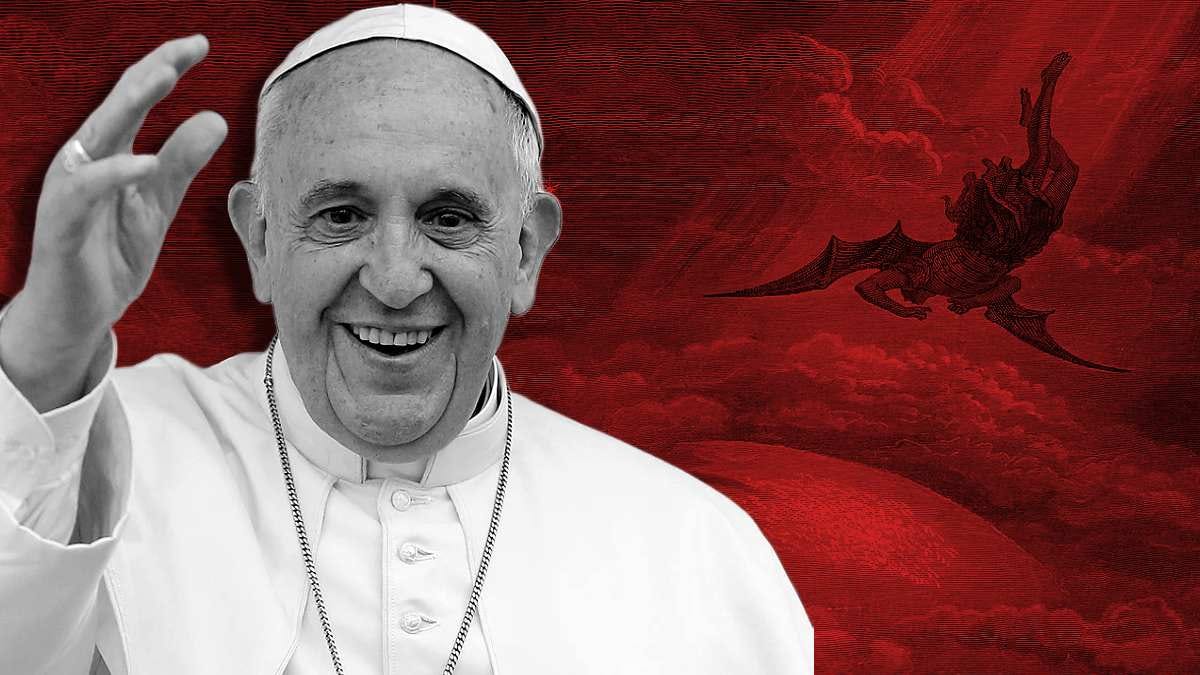
The Vatican published excerpts of The Private Diary of Pope Francis on Tuesday, and the entries that will travel furthest concern the devil.
As I reported this morning, the diary records a man who spent three decades afraid of what power could do to his soul. Francis described three encounters with the devil, two in Buenos Aires and a third after his January 2018 trip to Chile, where he had first dismissed the victims of the country’s most notorious abuser.
On June 7, 2018, after the investigation he commissioned proved those victims right, Francis wrote that he “saw the entrance to hell.”
In a Jan. 24, 2021, entry, he recalled the devil appearing to him at a meeting days after he returned to Rome from Chile and saying, “Now I’ve gotten everything I wanted.” He wrote that he could not forget “the powerful raspiness of his voice.”
Cardinal Víctor Manuel Fernández, who leads the Vatican’s doctrine office, curated the volume. Francis had shown him the leather-bound calendar he kept from 1992 until August 2024 and told him, “From this, you will all see.”
The diary lands in a Church still absorbing what the Justice Department’s Epstein files revealed this year. In June 2019, Steve Bannon wrote to Jeffrey Epstein that he would “take down Francis,” filing the pope alongside “the Clintons, Xi” and the European Union on his list of enemies. As I reported in Part One of our Epstein-Bannon investigation, the two men treated the papacy as a political target to be broken.
So the devil has walked back into the Catholic conversation this week. It is worth understanding what the Church actually teaches about him.
What the Church teaches
The Catechism of the Catholic Church speaks of Satan without embarrassment. Behind the fall of our first parents, it says, “lurks a seductive voice, opposed to God.” When Christians close the Our Father by asking to be delivered from evil, the Catechism insists that evil “is not an abstraction, but refers to a person, Satan, the Evil One, the angel who opposes God.”
The same text puts a ceiling on the devil’s domain, however. Satan’s power “is, nonetheless, not infinite,” it teaches, because he is “only a creature.” Catholic teaching on the devil has always held both truths at once, taking evil seriously while denying it the final word.
Why Francis kept talking about him
Every modern pope believed this, yet most of them spoke of Satan sparingly. Paul VI devoted a general audience to the subject on Nov. 15, 1972, calling evil “a living, spiritual being, perverted and perverting,” an address still cited whenever the subject comes up.
Francis made the devil a regular guest in his preaching from the first week of his pontificate. Celebrating Mass with the cardinals who had just elected him, he borrowed a line from the French writer Léon Bloy: “Whoever does not pray to the Lord prays to the devil.”
He had been saying it for years. In his 2010 book of conversations with Rabbi Abraham Skorka, then-Cardinal Jorge Mario Bergoglio argued that the devil’s greatest achievement in these times “has been to make us believe that he doesn’t exist.” Eight years later, in Gaudete et Exsultate, he warned Catholics against treating the devil as “a myth, a representation, a symbol, a figure of speech or an idea.”
The root of this is Jesuit. Saint Ignatius of Loyola built his Spiritual Exercises around a contest between Christ and the one he called “the enemy of our human nature,” and his meditation on the Two Standards asks the retreatant to choose which banner to march under. Father Gerald Blaszczak, a Jesuit at the order’s Rome headquarters, explained in 2013 that Francis came from a tradition where the evil spirit is mentioned frequently, and that sowing pessimism and despair is that enemy’s usual method.
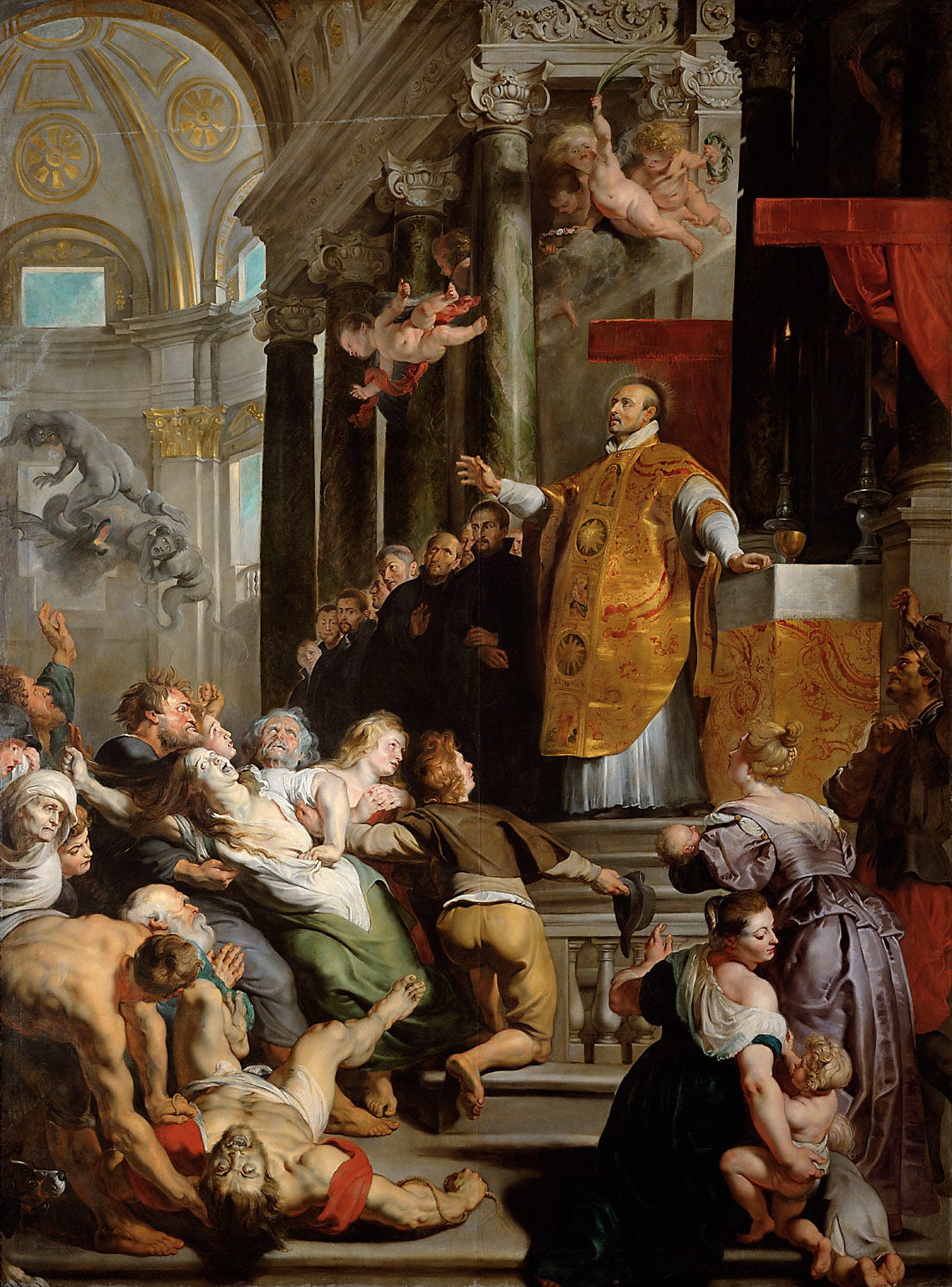
In 2022, Francis spent months of Wednesday audiences teaching Ignatian discernment to the world. That December he told pilgrims the devil seldom overpowers anyone; he arrives politely, asks to come in, and then makes himself at home.
Latin America shaped the rest. Bergoglio was formed as a priest and bishop in Argentina, where the faith of ordinary parishes never stopped naming the devil as a real adversary, and where two of the three encounters in his diary took place.
His devil rarely resembled a horned figure from a medieval fresco. Francis found him in gossip and clerical careerism. He described the devil’s work as the “venom of hatred, desolation, envy and vice,” and on Nov. 25, 2018, in the same diary entry where he heard the devil’s voice, he confessed to “taking on matters and problems as if I’m omnipotent.”
Why it landed in this moment
To plenty of Western ears, the talk sounded anachronistic. Here was a pope who wrote about climate and migrants with modern urgency, and then he would warn a crowd in St. Peter’s Square about Satan’s tricks.
Yet the language found a wide audience in a dark political season. When Vice President JD Vance, whose immigration theology Francis had rebuked in a letter two months earlier, met Francis briefly on Easter Sunday 2025 and the pope died the next morning, social media filled with jokes casting Vance as the antichrist, or as the devil himself paying a final call.
The memes were gallows humor. Underneath them sat a real recognition that Francis had handed ordinary people a vocabulary for evil that moves through flattery and lies.
To be clear, I don’t think JD Vance is the devil. His mentor Peter Thiel has labeled Benedict XVI’s longtime friend the Antichrist and suggested Pope Leo XIV is the Antichrist’s tool, and I won’t treat my political opponents that way. But demonic influences do infuse our politics, and Francis gave Catholics the tools to recognize them.
I have always placed politics between two papal convictions. Francis called it “a lofty vocation and one of the highest forms of charity” in Evangelii Gaudium.
Joseph Ratzinger, the future Benedict XVI, warned that “wherever politics tries to be redemptive, it is promising too much. Where it wishes to do the work of God, it becomes not divine, but demonic.”
What the Church asks (and what Francis asked constantly) is that Christians discern which spirit is moving in public life, including in a political operative’s promise to a convicted sex offender that he would bring down the Vicar of Christ.

The diary shows Francis turning that test on himself first. He recorded the temptation to power in his own heart, and by Dec. 30, 2022, he wrote of having entrusted himself to God. Fernández also recalls Francis describing then-Cardinal Robert Prevost as “a great pastor, a generous missionary, and an irreproachable man.”
Pope Leo XIV now carries forward a Church that Francis spent twelve years teaching to recognize the enemy and to refuse him a seat at the table.
At Letters from Leo, we stand with Pope Leo XIV and every Catholic or person of goodwill who believes evil can be named and resisted. We will keep reporting on the men who thought a billionaire and a political operative could decide who sits on the Chair of Peter.
This is the fastest-growing Catholic community in the country because people are hungry for a faith that can name darkness without surrendering to it. They want the truth about who tried to break a pope, and the Gospel courage to answer them.
If you believe this movement matters, I am asking you to join us.
If you’d like to invest in our mission, here are three ways you can help:
Subscribe as a paid member to receive exclusive posts about the life and formation of Pope Leo and help sustain this newsletter.
Donate with a one-time gift to fuel this project’s mission.
Share this post (and Letters from Leo) with a friend who might enjoy it.
Paid members receive our full Epstein-Bannon investigation and our ongoing series on Pope Leo’s life and formation.
Whether you give $0, $5, $50, $500, $1,000, or more, your presence here matters — no matter your faith or your politics.
Thank you for reading. I’ll see you on the road.
