


Thank you for reading! Letters from Leo is a reader-supported publication and the fastest-growing Catholic community in the country. To receive new posts and support this movement, consider becoming a free or paid subscriber.
Dear friends —
Before you read today’s essay, one important note:
Anyone who purchases a yearly subscription to Letters from Leo or donates $80 or more from this post will receive a free copy of Armando Jesús Lovera Vásquez’s From Robert to Pope Leo: Our Friendship, His Mission, the memoir of the man Pope Leo XIV calls a soul friend.
This offer is available through Sunday, November 22, at 11:59 PM PST.
We have done this five times now, with Gerard O’Connell and Elisabetta Piqué’s conclave book, Christopher Lamb’s American Hope, Elise Ann Allen’s biography, Leo’s own Freedom Under Grace, and NPR’s American Pope. Many of you joined this community through those books.
One evening this past May, Armando Lovera was heading home to Valladolid, Spain, after an event for his book when his Citroën flashed a warning about its catalytic converter. He sent a photo of the dashboard over WhatsApp to the contact saved in his phone as “Bob.”
Pope Leo XIV, who was preparing a major statement on artificial intelligence that month, wrote back: “What’s going on with the Citroën?”
“It’s dying,” Lovera replied.
The pope wanted to know whether the car was running or stopped somewhere, and how much farther Lovera had to go. He told him to “keep a close eye on the engine temperature” and to “drive carefully.” Then he added a mechanic’s note: “Sometimes at low speed it doesn’t run well. But at a higher speed, the oil flows normally.”
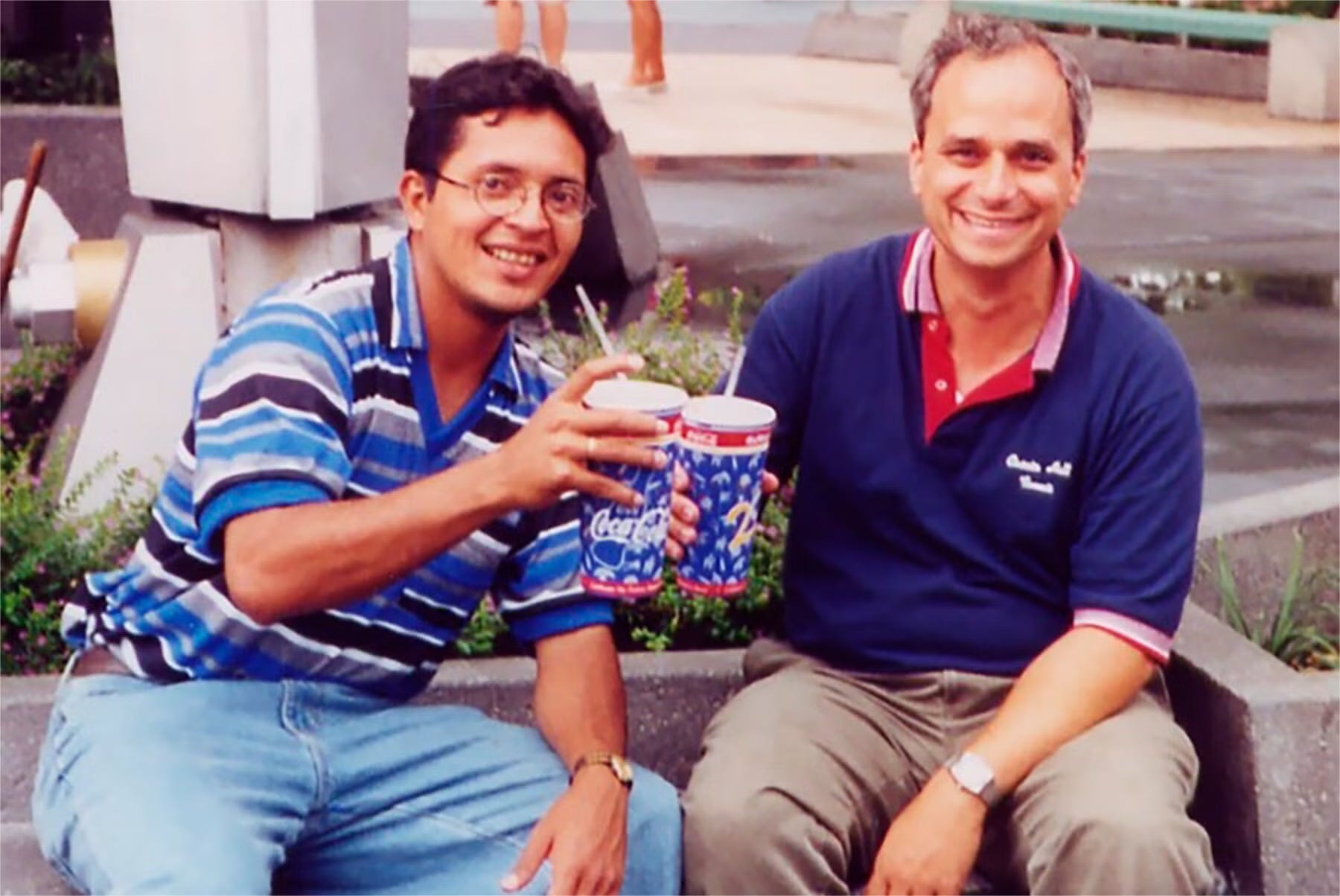
Lovera has been trading messages like that with Robert Prevost since 1991. He is the rare friend who still gets a pope’s advice on his car.
At 11 p.m. on May 16, 2025, eight days after the conclave, Armando Lovera worked up the nerve to text the new pope from Valladolid, Spain, where he lives with his family.
He wrote that he knew the Holy Father was extremely busy and asked for a couple of minutes. The answer came back almost at once: “Good evening! Are you awake? Call if you want.”
So Lovera called, and he told the man he still thought of as Padre Roberto that he wanted to write a book about him from the perspective of friendship. Leo XIV needed one breath to answer. “You’re my friend. I trust you.”
Then the pope pointed out something Lovera had forgotten. May 16 is the feast of Sts. Alypius and Possidius, two of Augustine’s closest companions, and Leo told him it was “Augustinian Friendship Day.”
That phone call became De Roberto a León, which I reviewed in two parts last November (Part I and Part II) while it existed only in Spanish. Liturgical Press brought out the English translation this spring as From Robert to Pope Leo: Our Friendship, His Mission, a slim paperback of about 150 pages.
It reaches American readers at a fitting moment. Last week, a month after surgeons removed part of his right lung, Leo went back to Peru for the first time as pope, and as he said goodbye he told Peruvians, “It was here that you taught me how to be a bishop.” Lovera’s book is about the years when they were teaching him.
The friend from Iquitos
Lovera grew up in Iquitos, the Amazon river city in northeastern Peru, and he met Father Robert Prevost in 1991. Someone had warned him in advance that the newcomer was “American and a canon lawyer,” so he braced for a stiff academic. He found a man with fluent Spanish and a disarming friendliness, and by the end of the afternoon Robert had become Roberto.
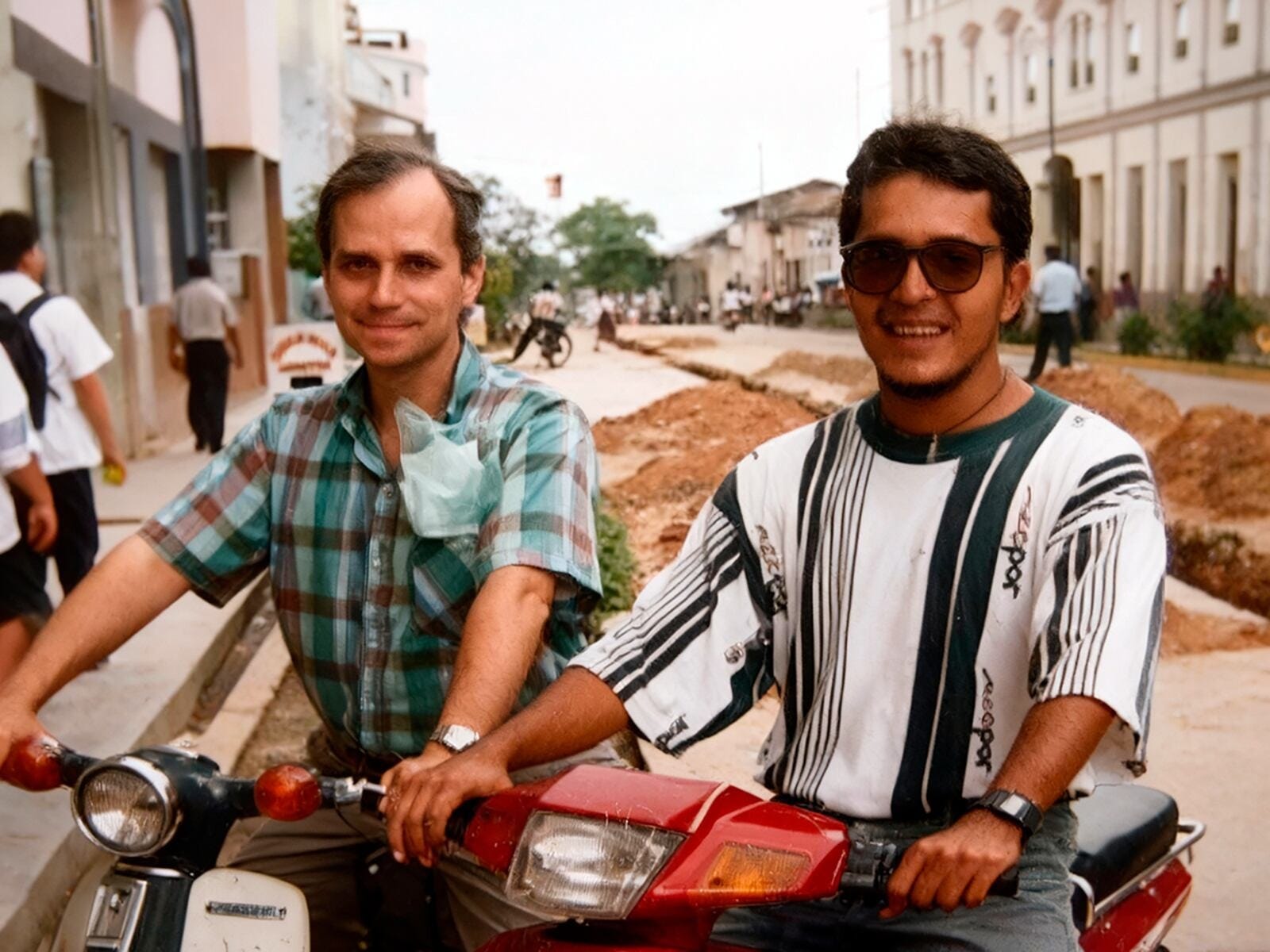
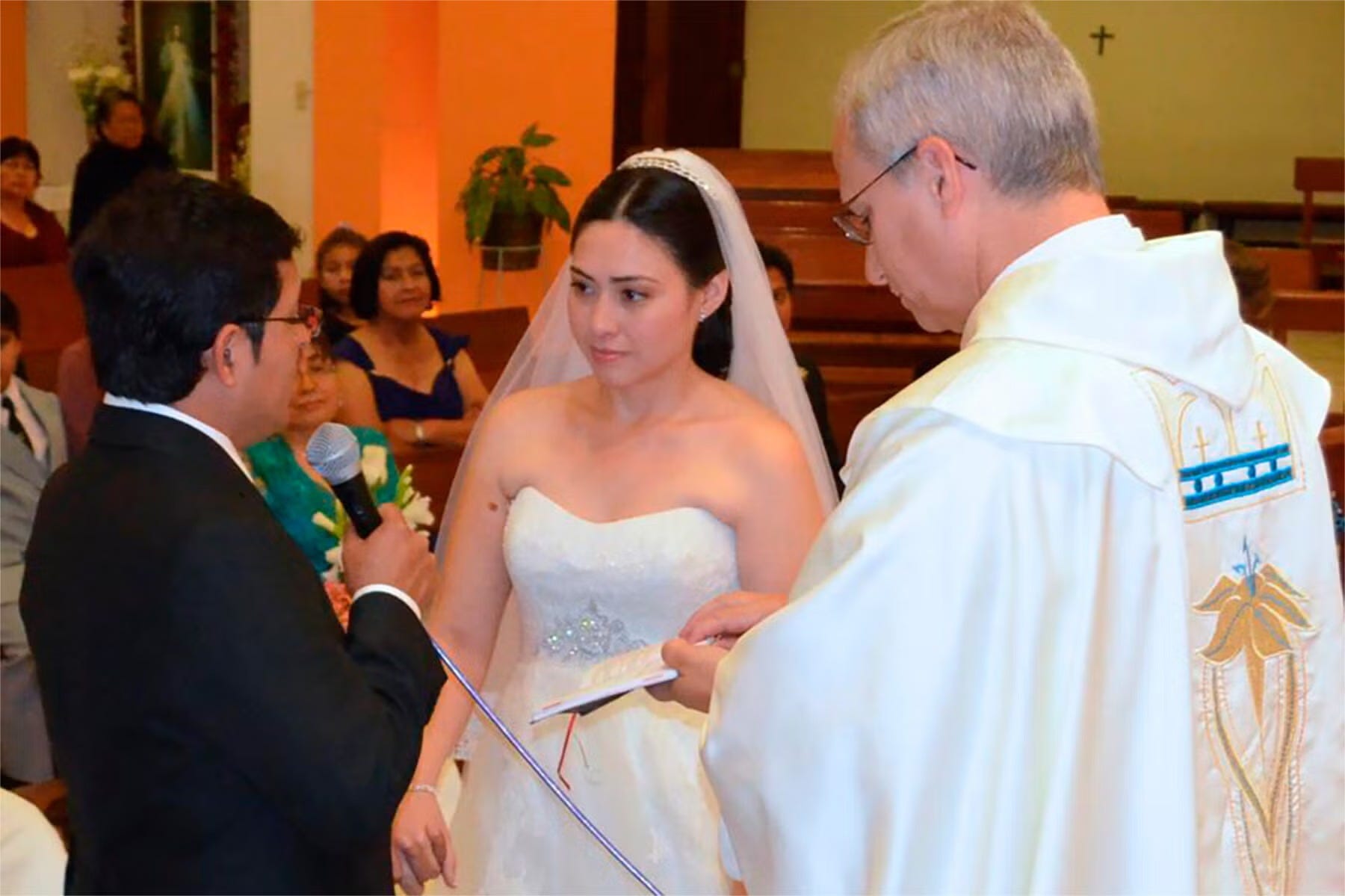
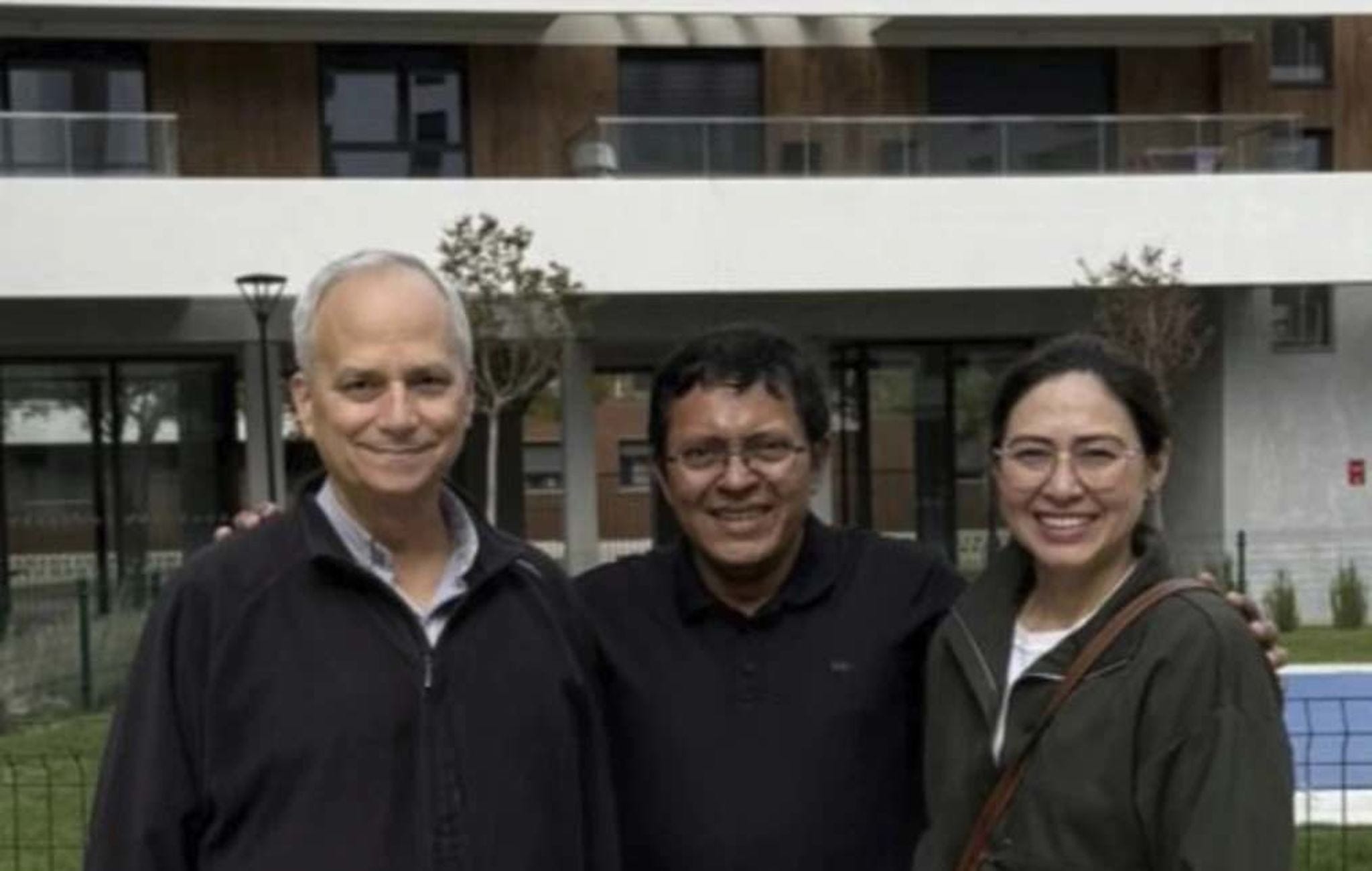
For seven years the two shared community life at the Augustinian formation house in Trujillo, on Peru’s northern coast, where Prevost was forming young Peruvians for the order. Lovera later moved to Spain, where he edits religious books for the Jesuits’ Grupo de Comunicación Loyola. Prevost was the witness at his civil wedding, then married Lovera and his wife, Nathalie, in a Trujillo church in 2013.
On May 8, 2025, Lovera was at a sports center in Valladolid, about to play padel, while his daughters watched the Vatican News feed through the fence. “Dad, they’re opening the door!” one of them shouted. When Cardinal Dominique Mamberti pronounced the first name, Robertum, Lovera writes that he felt a blade pierce his soul. He knelt down and covered his face with his hands.
In his office group chat that evening, he typed the line that gives the book its spirit: “He is my soul friend.”
What Leo told his friend about the name
The newest material for American readers concerns the papal name. Leo told the cardinals two days after his election that he chose it mainly because Leo XIII confronted the social question of his age in Rerum Novarum. He also said there were several reasons.
On that same May 16 call, Lovera asked about the others. Did they include Leo XIII’s closeness to the Augustinians, his devotion to Our Mother of Good Counsel, his push to send missionaries into the Peruvian Amazon, or his attention to the church in the United States?
“Those were among the several reasons,” Leo replied.
Each of those threads runs through the book. Leo XIII restored the old Augustinian monastery in his hometown of Carpineto Romano, and in 1903 he added “Mother of Good Counsel” to the Litany of Loreto. In 1900, Rome entrusted the new Apostolic Prefecture of San León del Amazonas to the Augustinians, a territory that took in Lovera’s own Iquitos.
Padre Roberto in Trujillo
The book is strongest when Lovera writes about things he saw. One of the Trujillo seminarians, a young man named Gumersindo, died in a car accident near Lima after deciding to leave formation. His family asked Prevost to bring the body home, a round trip of nearly 2,000 kilometers, and he did it himself.
When Prevost identified himself at the scene, a reporter misunderstood, and the Trujillo newspaper announced that Padre Roberto had died in the crash. Parishioners came to the Augustinian house in tears, newspapers still in hand. Then the dead man opened the door.
When word came from Chicago that his father’s surgery had gone badly, Lovera and another Augustinian, Father Walker Dávila Ríos, drove Prevost through the night to the Lima airport, about 560 kilometers, taking turns at the wheel. After a day of connecting flights, he walked into the intensive care unit, and Louis Prevost opened his eyes. “What are you doing here? You should be on the mission!” Father and son started laughing, even though it hurt Louis to laugh.
Riggitano, Fontaine, Martinez
The family chapters, built on research by Íñigo Ybarra Morell, a colleague of Lovera’s who also wrote the foreword, give the fullest English account I have read of where the Prevost name came from.
Leo’s grandfather was born Salvatore Giovanni Riggitano in Milazzo, Sicily, in 1876. (Leo told Lovera that a historian had found the birth house on Via Sant’Agostino, near a church of the same name.) Salvatore landed at Ellis Island on June 5, 1903, declaring $26, and built a career as a traveling language teacher in Quincy, Illinois, and later Chicago.
In March 1917, police in Quincy arrested him alongside Suzanne Fontaine, a young Frenchwoman from Le Havre, after Salvatore’s wife, Daisy Hughes, accused them of adultery. Suzanne gave birth to their first son that July at Our Lady of Victory Infant Home in Lackawanna, New York, a refuge for unwed mothers run by the Sisters of St. Joseph. Salvatore never lived with his wife again, and he dropped the name Riggitano from his documents. He took the surname of Suzanne’s mother, Prévost, minus the accent.
Their second son, Louis, was born in Chicago in July 1920. Twenty-four years later, Lovera writes, Ensign Louis Prevost of the U.S. Navy commanded a landing craft carrying soldiers toward Omaha Beach.
On his mother’s side, Leo descends from Creoles of color in New Orleans’s Seventh Ward. Lovera explains how Joseph Martinez and Louise Baquié appear as “white” in the 1910 census, with Joseph’s parents relabeled “Maltese” and “Spanish,” a year before the family left for Chicago. Henry Louis Gates Jr. walked Leo through that history last year, but Lovera puts a human face on what “passing” cost. Their youngest daughter, Mildred, was born in Chicago on Dec. 30, 1911.
A politics of friends
Lovera’s thesis is simple, and it is more countercultural than it sounds. For Prevost, friendship is how he believes. Leo chose In Illo Uno Unum (“In the One, we are one”) as his motto, a line from Augustine’s commentary on Psalm 127, and at his first Mass with the cardinals he described the church as “a community of friends of Jesus.”
When Lovera asked the pope for a few words to open the book, Leo sent him a passage from his vigil with a million young people at Tor Vergata in August 2025: “Friendship can truly change the world. Friendship is a path to peace.” Then he added a line meant only for Lovera. “You’re a good friend.”
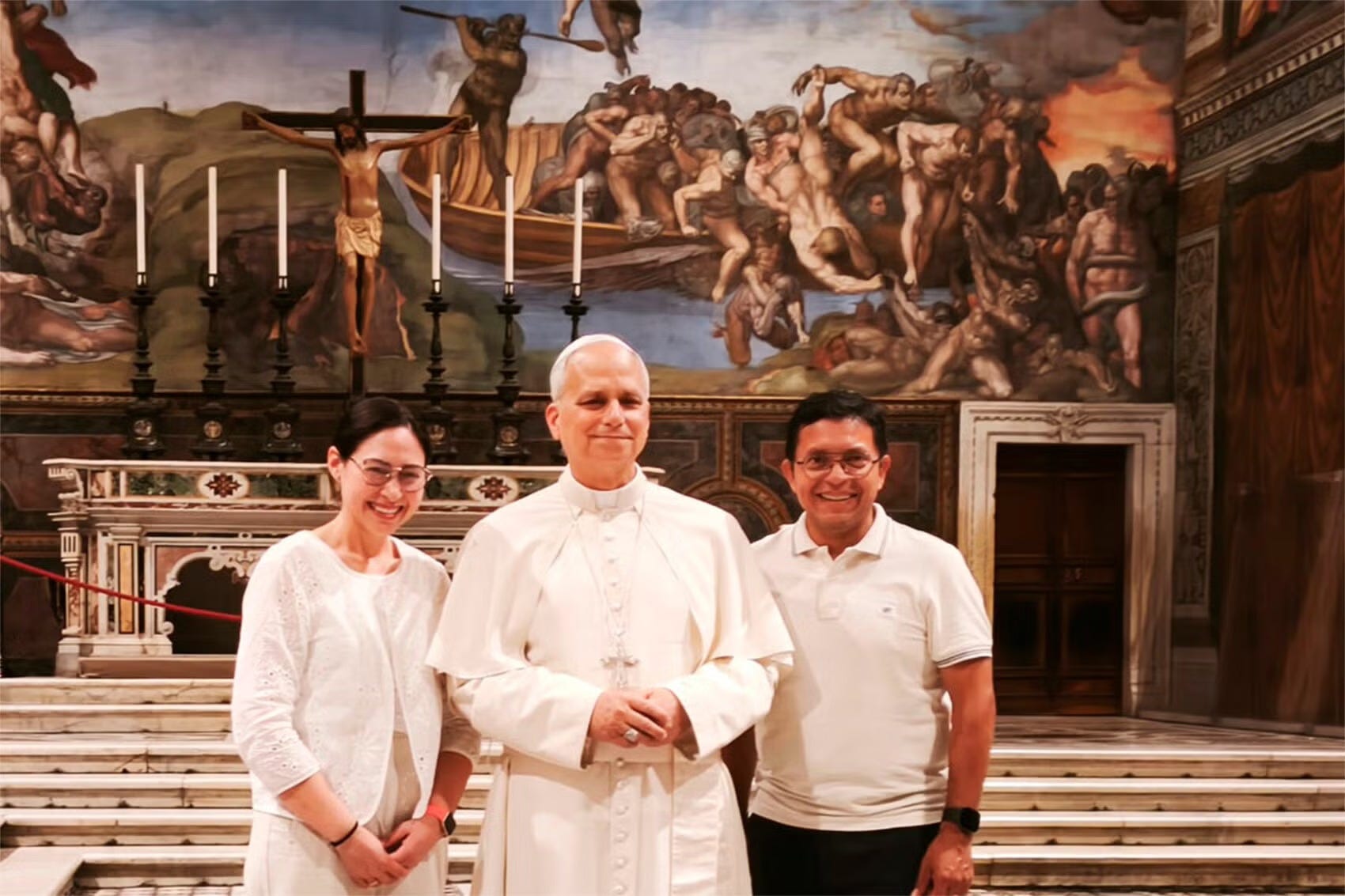
Set that beside the American president. Earlier this month, Ross Douthat asked Donald Trump on 60 Minutes whether he could forgive his enemies before God, and Trump answered, “I do hate some of my enemies.” Last December, Leo had already given the Catholic answer: “Christians have no enemies — only brothers and sisters.”
A movement built on enemies needs a steady supply of them, and this year MAGA has added the pope himself to the list. Lovera’s Padre Roberto spent those same decades in Peru doing the slower work, driving a former seminarian’s body home to his family and staying put in the early 1990s, when Shining Path guerrillas were murdering foreign priests in Peru and warning missionaries to leave. A church formed by that kind of friendship has an answer to the politics of enmity, and the American pope has been giving it from St. Peter’s Square.
“I’m home. You can come when you’re ready.”
The book ends where Lovera’s story with the pope reached its fullest circle. In October 2025, after launching the Spanish edition in Rome, Lovera got a text from the Vatican: “I’m home. You can come when you’re ready.”
He crossed the street with bags full of books, and a Swiss Guard asked where he was going. Lovera said he had come to see the Holy Father. “Who?” the guard asked. Upstairs, at the end of a creaking wooden elevator, the nameplate on the apartment door still read “Cardinal Robert Francis Prevost.”
Leo signed every copy, laughing as he asked, “I have to sign all of these, Armando?” Then he looked at the two portraits on the cover, one of a young priest and one of a pope, and told his friend, “You’ve made me look so serious here.”
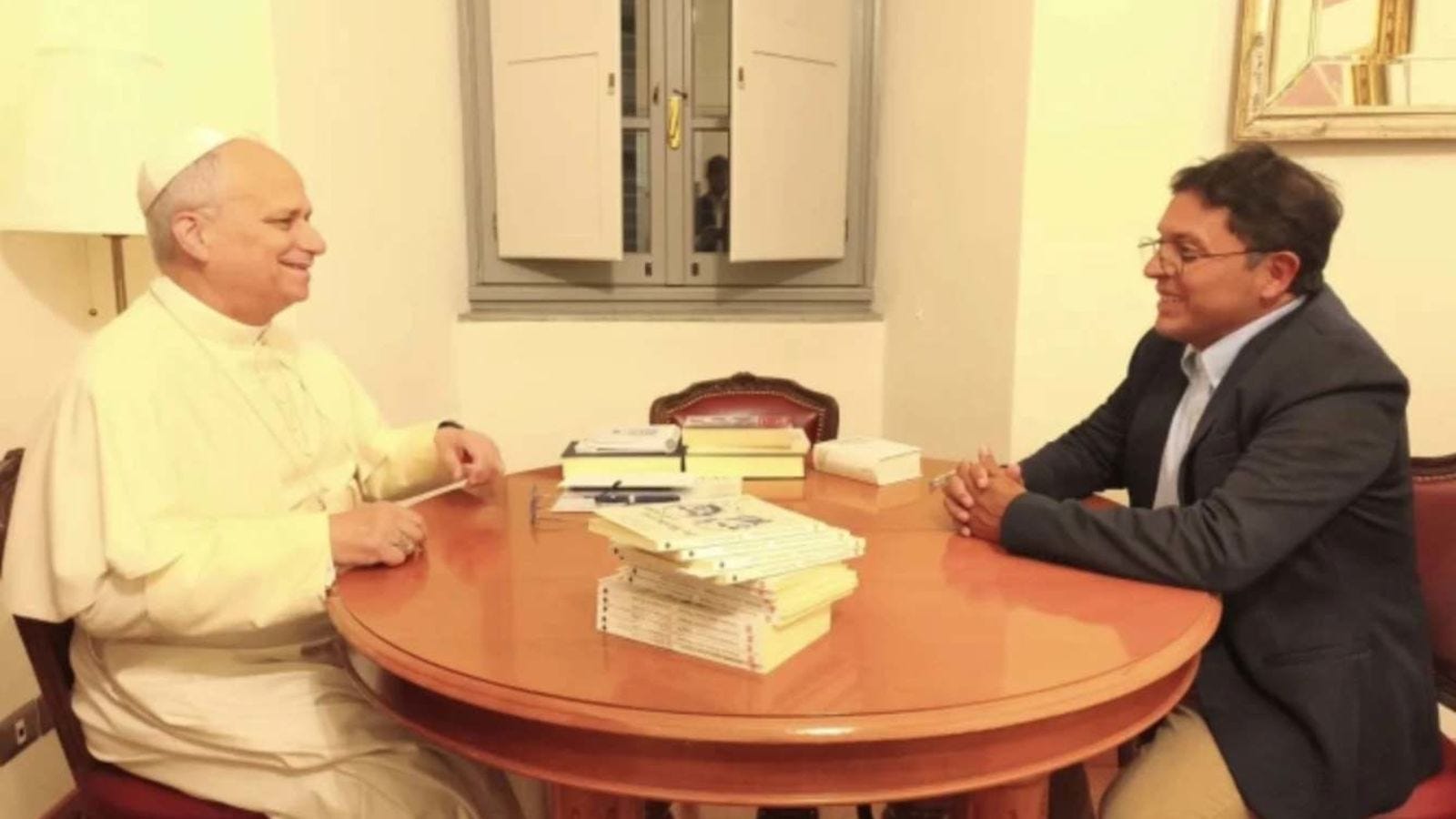
He doesn’t look serious in the photo from that evening, and he doesn’t look serious in Lovera’s pages either. He looks like a man among friends.
A reminder: anyone who purchases a yearly subscription to Letters from Leo or donates $80 or more from this post will receive a free copy of From Robert to Pope Leo.
The offer runs through Sunday, November 22, at 11:59 PM PST.
At Letters from Leo, we stand with Pope Leo XIV and with the friends who formed him, from the Augustinian brothers of Trujillo and the families of Chiclayo to the elderly of Callao and the seminarians he drove across the Andes, and with everyone who believes the church is a community of friends of Jesus.
This is the fastest-growing Catholic community in the country because people are hungry for friendship that can bear weight, the kind that drives through the night and keeps showing up for thirty years. They are tired of a politics that lives on enemies, and they want a church that looks like the one Padre Roberto built.
If you believe this movement matters, Catholics and people of goodwill choosing friendship over the politics of enmity, I am asking you to join us.
If you’d like to invest in our mission, here are three ways you can help:
Subscribe as a paid member to receive exclusive posts about the life and formation of Pope Leo and help sustain this newsletter.
Donate with a one-time gift to fuel this project’s mission.
Share this post (and Letters from Leo) with a friend who might enjoy it.
Paid subscribers receive our full series on Pope Leo’s Life & Formation, which follows him from Chicago’s South Side to Trujillo, Chiclayo, and Rome, along with our Sunday Scripture Reflection Series and every investigation we publish.
Whether you give $0, $5, $50, $500, $1,000, or more, your presence here matters — no matter your faith or your politics.
Thank you for reading. I’ll see you on the road.

Lovin’ Pope Leo XIV!
He ALWAYS gives me HOPE!
Mon pape Léon, je t'aime et je te portes en permanence dans mes prières et dans mon cœur. J̌e t'aime très fort.
Thérèse.